20 Best Metal Kitchen Gadgets Every Home Cook Should Own
Introduction: The Essential Role of Metal Kitchen Gadgets
Walk into any professional kitchen, and you’ll notice something striking: metal kitchen gadgets dominate the workspace. There’s a reason culinary schools and veteran chefs alike reach for stainless steel, cast iron, and aluminum tools over their plastic counterparts. Metal kitchen equipment offers
- unmatched durability
- heat resistance
- precision that transforms everyday cooking from a chore into an art form.
The global kitchen utensils market has seen remarkable growth, reflecting a shift toward quality over disposability. Home cooks increasingly recognize that a single well-crafted metal spatula can outlast a dozen plastic versions. These tools don’t just survive the rigors of daily cooking—they excel under conditions that would warp or melt lesser materials. From specialized electric grinders with stainless steel mechanisms to vintage cast iron that spans generations, metal construction defines kitchen reliability.
What follows is a curated exploration of twenty essential metal kitchen gadgets that deserve space in your culinary arsenal. Each tool has earned its place through proven performance, thoughtful design, and the kind of longevity that makes it worth the investment.
If you’re building a better cooking space, explore more tools in our kitchen gadgets guide.
1. Cast Iron Skillet: A Timeless Classic
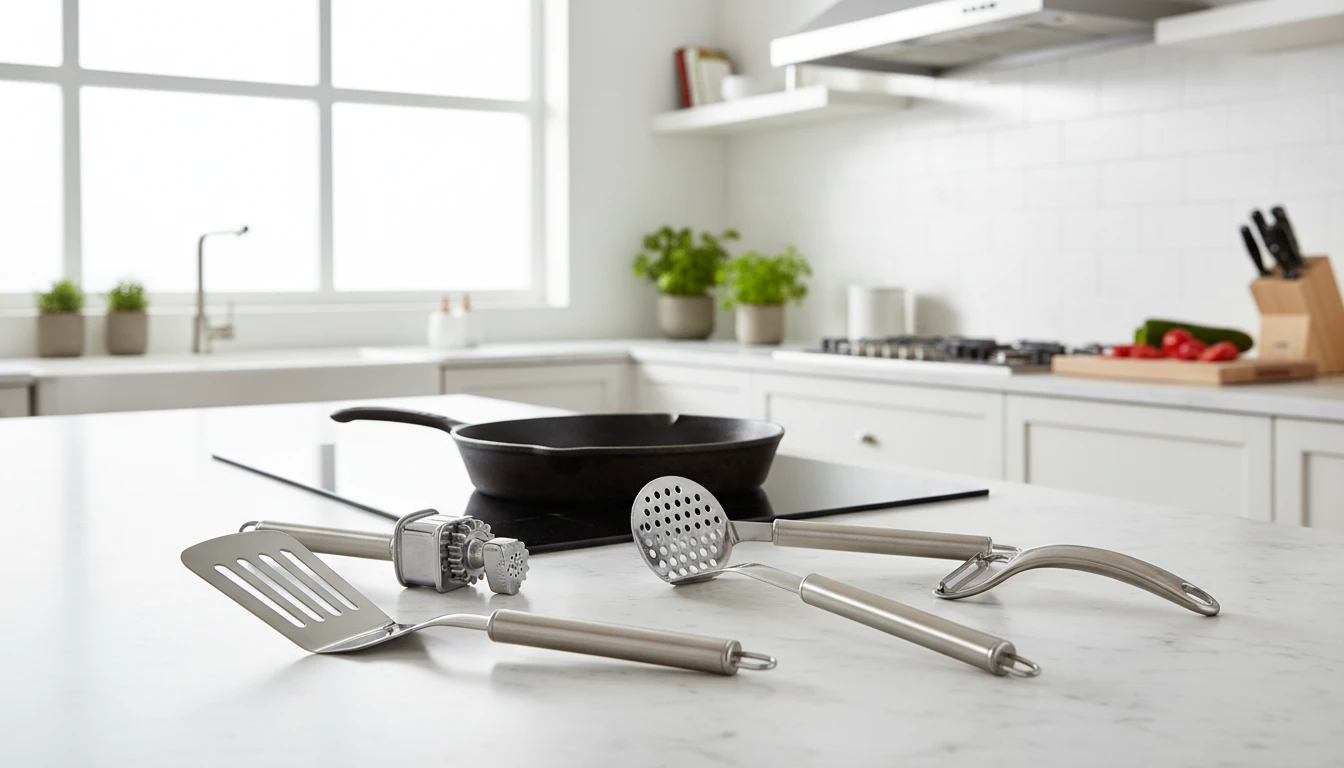
Few metal kitchen gadgets have stood the test of time like the cast iron skillet. This workhorse has anchored kitchens for centuries, offering unmatched heat retention and versatility that modern alternatives struggle to match. From searing steaks to baking cornbread, a well-seasoned cast iron pan handles temperatures that would warp lesser cookware.
What sets cast iron apart is its natural non-stick surface that improves with use. Each cooking session builds up layers of polymerized oil, creating a slick patina that rivals commercial coatings—without the chemicals. The skillet transitions seamlessly from stovetop to oven, making it ideal for dishes requiring multiple cooking methods.
While cast iron requires different care than stainless steel utensils and cookware, the trade-off is durability measured in generations. A properly maintained skillet becomes a family heirloom, delivering consistent performance decade after decade. The stainless steel blades of modern gadgets may offer convenience, but cast iron provides something rarer: reliability that only deepens with age.
The market reflects this enduring appeal—cast iron remains a cornerstone product even as high-end kitchen utensils evolve with new materials and technologies. Its unbeatable heat distribution transforms ordinary ingredients into restaurant-quality results, making it the foundation upon which serious home cooking is built.
2. Stainless Steel Garlic Press: A Kitchen Staple
If you’ve ever minced garlic by hand, you know the frustration: sticky fingers, uneven pieces, and that lingering odor that refuses to wash away. A stainless steel garlic press eliminates these hassles entirely, transforming fresh cloves into perfectly minced garlic in seconds.
Unlike flimsy plastic alternatives, stainless steel construction offers exceptional durability. The market for stainless steel kitchen utensils continues growing as consumers recognize the longevity and performance of quality metal kitchen tools. A well-made garlic press features a sturdy pressing chamber and ergonomic handles that generate enough leverage to pulverize garlic—no hand fatigue required.
The advantages go beyond convenience. Pressing garlic releases more of its aromatic oils compared to knife-chopping, intensifying flavor in sauces, marinades, and dressings. Most stainless steel models also include built-in cleaning combs that eject garlic remnants, making cleanup remarkably quick.
For home cooks who regularly use garlic, this gadget pays dividends in time saved and consistency achieved—a small investment that transforms everyday meal preparation.
3. Potato Masher: Simplifying the Mash
The humble potato masher proves that simple design often delivers the best results. This unpretentious tool—typically crafted from stainless steel kitchen utensils materials—transforms boiled potatoes into creamy perfection with minimal effort. Unlike electric alternatives that can overwork the potatoes, create a gluey texture, and a manual masher gives you complete control over consistency. The market for high-quality stainless steel kitchen tools continues to grow as home cooks recognize the value of durable equipment. Modern mashers feature ergonomic handles that reduce hand fatigue and perforated heads that efficiently break down potatoes while allowing steam to escape. Beyond potatoes, this versatile tool excels at mashing sweet potatoes, carrots, or avocados for guacamole.
The key to choosing a quality masher lies in weight distribution and construction. A well-balanced tool feels natural in your hand and won’t bend under pressure, making the often-tedious task of mashing surprisingly manageable.
4. Cheese Slicer: Precision Cutting Made Easy
The wire cheese slicer transforms a potentially messy task into an effortless glide through even the firmest blocks. This Scandinavian invention—consisting of a stainless steel wire stretched across a sturdy frame—delivers uniform slices without the drag or crumbling associated with knife cuts. Whether you’re preparing cheese boards or adding toppings to sandwiches, this tool ensures consistent thickness every time.
What sets metal cooking utensils like the cheese slicer apart is their engineering precision. The tensioned wire creates minimal friction against the cheese surface, requiring less force than traditional blade methods. According to U.S. metal kitchen cookware market analysis, stainless steel construction dominates this product category due to its resistance to corrosion from dairy acids and ease of cleaning.
Beyond basic slicing, modern designs include adjustable thickness settings and replaceable wires. The roller-style variation features a rotating blade particularly effective for soft cheeses like brie or camembert. For home entertainers, this simple tool elevates presentation while maintaining portion control—a practical advantage during cocktail hours or family gatherings.
5. Vegetable Peeler: A Precision Tool
The vegetable peeler represents engineering minimalism at its finest—a simple blade mounted on a handle that transforms tedious prep work into swift, satisfying strokes. Modern Y-peelers with their perpendicular blade design offer superior control compared to traditional straight peelers, allowing you to glide through everything from delicate asparagus stalks to tough butternut squash skins.
While lightweight stainless steel models dominate today’s market, certain premium peelers incorporate cast iron kitchen tools principles in their construction, using heavier metal bodies that provide stability during repetitive peeling tasks. The Kitchen Tools and Accessories Market projects continued innovation in this category, with ergonomic handles and precision-ground blades becoming standard features.
A quality metal peeler should feel balanced in your hand, with a sharp carbon steel or ceramic blade that maintains its edge through hundreds of potatoes. What typically happens is that cheaper models dull within months, requiring more pressure and creating uneven peels that waste valuable vegetable flesh beneath the skin.
6. Stainless Steel Kitchen Utensils: The All-Purpose Set
A comprehensive stainless steel utensil set forms the backbone of efficient kitchen work, offering durability that outlasts alternatives by decades. These multipurpose tools—spatulas, ladles, whisks, and tongs—handle everything from sautéing to serving without warping, staining, or retaining odors.
The stainless steel kitchen utensils market continues expanding as home cooks recognize the long-term value proposition. Unlike aluminum kitchen gadgets that may react with acidic foods, stainless steel maintains its integrity across all cooking applications. The material’s non-reactive surface means your tomato sauce won’t develop a metallic taste, and delicate fish won’t pick up unwanted flavors.
A starter set should include five essential pieces: slotted turner, solid spoon, slotted spoon, ladle, and locking tongs. This combination covers the fundamental techniques—flipping, stirring, serving, and gripping—without cluttering drawers with redundant tools. Look for one-piece construction or securely riveted handles that won’t loosen over decades of dishwasher cycles and high-heat exposure.
Limitations and Considerations
While metal kitchen gadgets offer exceptional durability, they’re not universally superior for every task. Temperature conductivity presents a significant drawback—stainless steel handles on pots and utensils can become uncomfortably hot during cooking, requiring pot holders or silicone grips for safe handling.
Weight considerations matter for certain users. Metal implements like a heavy-duty cheese slicer or large serving spoon can cause hand fatigue during extended prep sessions, particularly for those with arthritis or limited grip strength. In practice, this explains why many professional kitchens stock both metal and lightweight alternatives.
Metal gadgets also require specific care protocols. Certain stainless steel items shouldn’t mix with cast iron or carbon steel in dishwashers due to galvanic corrosion risk. Additionally, metal peelers and graters can scratch nonstick cookware surfaces, necessitating dedicated tools for different pan types.
However, these limitations rarely outweigh the benefits for most households. The key lies in strategic selection—choosing the right metal tool for each specific application rather than replacing every gadget indiscriminately. This targeted approach balances performance advantages with practical usability concerns.
Common Questions About Metal Kitchen Gadgets
Why Use Cast Iron Pans?
Cast iron pans offer unmatched heat retention and develop natural non-stick surfaces through seasoning—a process that improves with each use. Unlike synthetic coatings that degrade, properly maintained cast iron becomes more effective over time. These pans transition seamlessly from stovetop to oven, handle temperatures exceeding 500°F, and add trace amounts of dietary iron to food during cooking. The material’s exceptional thermal mass ensures consistent temperatures even when cold ingredients hit the surface, making cast iron ideal for searing steaks or baking cornbread with crispy edges.
Do Metal Utensils Damage Cookware?
The answer depends entirely on surface compatibility. Metal tools can scratch Teflon and ceramic coatings, voiding warranties and reducing performance. However, they’re perfectly safe for stainless steel, carbon steel, and well-seasoned cast iron—surfaces designed to withstand metal contact. One practical approach is maintaining separate tool sets: silicone-tipped implements for non-stick cookware and stainless steel tools for everything else.
What is the healthiest metal for utensils?
Stainless steel ranks as the healthiest metal for kitchen utensils due to its non-reactive properties and resistance to corrosion. Unlike copper or aluminum, which can leach into acidic foods, food-grade stainless steel (typically 18/10 or 18/8) maintains its integrity across all cooking environments. The chromium content creates a passive layer that prevents metal ions from migrating into food, making it ideal for everything from spatulas to ladles.
Cast iron follows as a close second, offering the unique benefit of naturally fortifying food with dietary iron—particularly beneficial for those with iron deficiencies. However, it requires proper seasoning and maintenance to prevent rust and reactivity with acidic ingredients. Titanium represents the premium option, combining the non-reactivity of stainless steel with exceptional strength-to-weight ratios, though its higher cost limits widespread adoption in everyday cooking tools.
The online kitchenware sales industry has seen growing consumer interest in health-conscious metal choices, with buyers increasingly scrutinizing material composition before purchase. What typically happens is savvy cooks avoid uncoated aluminum and bare copper for food-contact surfaces, reserving these metals for exterior cookware layers where they excel at heat distribution without compromising food safety.
Technical Deep Dive: The Science of Stainless Steel
Stainless steel dominates modern kitchens because of its chromium content—typically 10.5% or higher—which creates a passive oxide layer that resists corrosion and staining. This invisible protective barrier regenerates when scratched, making stainless steel exceptionally durable for daily cooking tasks.
The most common grades for kitchen tools are 18/10 and 18/8 stainless steel, where the numbers represent chromium and nickel percentages respectively. The nickel content enhances corrosion resistance while providing that signature lustrous finish. According to industry analysis, metal kitchen products continue gaining market share specifically because of these material properties that balance performance with safety.
One practical consideration: stainless steel has lower thermal conductivity than copper or aluminum, which is why high-end cookware often features layered construction. However, this same property makes stainless steel utensils—spatulas, tongs, and serving pieces—safer to handle during cooking since they don’t transfer heat as readily to your hand. The non-reactive nature means acidic foods like tomato sauce won’t leach metallic flavors or harmful compounds into your meals.
Example Scenarios: Choosing the Right Gadget for Your Kitchen
Selecting metal kitchen gadgets depends on your specific cooking patterns and frequency of use. A weekend baker needs different tools than someone who meal-preps for the week or entertains regularly.
Example scenario: A home cook who prepares fresh meals daily should prioritize durable, multi-use stainless steel tools—a quality chef’s knife, sturdy tongs, and reliable measuring spoons form the foundation. These withstand daily washing and constant handling without degrading.
Example scenario: For occasional bakers, copper-core measuring cups offer precision while aluminum baking sheets provide even heat distribution at lower cost points. Since these tools see intermittent use, the investment threshold differs from professional-grade equipment.
Example scenario: Small-space kitchens benefit from collapsible metal strainers, magnetic knife strips instead of bulky blocks, and nesting stainless steel bowls that stack efficiently. A common pattern is choosing gadgets that serve multiple purposes—like a grater with interchangeable blades—to maximize limited storage.
What typically happens is that cooks gradually build their collection based on recurring frustrations. Notice which tasks you avoid or struggle with, then invest in quality metal tools that specifically address those pain points.
Key Takeaways
Metal kitchen gadgets represent a convergence of durability, functionality, and long-term value that positions them as essential investments rather than mere purchases. Stainless steel dominates for its chromium-oxide protection and dishwasher compatibility, while specialized metals like copper and cast iron serve targeted culinary functions. Understanding material properties—from thermal conductivity to reactivity with acidic foods—enables informed decisions that align with specific cooking patterns.
The practical approach involves building a core collection gradually: prioritize heat-resistant tools for everyday cooking, add specialty items as techniques expand, and maintain consistency within material families to streamline care routines. Price premiums for quality metals typically deliver measurable returns through reduced replacement frequency, with properly maintained stainless steel utensils often outlasting their users.
Safety considerations extend beyond material selection to include maintenance practices—establishing that even the healthiest metals require proper cleaning protocols to prevent bacterial growth and material degradation. What matters most isn’t finding a single “best” metal but matching material characteristics to intended applications, creating a personalized toolkit optimized for both performance and longevity.
What is the healthiest metal for utensils?
Stainless steel stands as the healthiest metal for kitchen utensils due to its non-reactive properties and resistance to corrosion. Food-grade stainless steel (typically 18/8 or 18/10 composition) doesn’t leach chemicals into food, making it particularly safe for acidic dishes like tomato sauces or citrus marinades. This inert quality means flavors remain pure without metallic interference.
Titanium offers another excellent health-conscious option, being completely non-toxic, and hypoallergenic. However, the commercial kitchen sector continues to favor stainless steel, with market data showing sustained dominance in professional environments where safety standards are paramount. The metal’s chromium content forms a protective oxide layer that prevents bacterial growth and simplifies sanitation protocols. Aluminum, while lightweight and affordable, requires anodization for safe food contact. Raw aluminum can react with acidic ingredients, potentially transferring trace amounts into food. Cast iron provides nutritional benefits by adding small amounts of dietary iron to meals, though it requires proper seasoning to prevent rust, and reactivity. For most home cooks prioritizing health without maintenance concerns, food-grade stainless steel remains the optimal choice that balances safety with practicality—setting the stage for understanding why professional chefs consistently reach for specific metals.
Do chefs use metal utensils?
Professional chefs overwhelmingly prefer metal utensils for their durability, heat resistance, and precision control in demanding kitchen environments. Stainless steel spatulas, whisks, and tongs dominate commercial kitchens because they withstand the intense heat, frequent cleaning, and rigorous use that plastic or wooden alternatives cannot endure. According to Global High-end Kitchen Utensils Market Growth 2026-2032, the professional segment drives significant demand for premium metal utensils, reflecting their status as industry standards.
Metal utensils offer immediate tactile feedback that experienced chefs rely on when sautéing, flipping, and or deglazing—advantages that silicone or nylon tools simply cannot replicate. The rigidity of stainless steel allows chefs to scrape fond from pan bottoms efficiently, while the balanced weight distribution provides the control necessary for delicate plating. However, many professionals now balance their metal tool collections with specialized cookware considerations, particularly when working with non-stick surfaces that require gentler implements. This pragmatic approach demonstrates how understanding material compatibility influences utensil selection in professional settings.
What are the healthiest utensils to use?
Stainless steel utensils rank as the healthiest choice for everyday cooking and serving, combining safety with durability. Food-grade stainless steel (18/8 or 18/10) resists corrosion, doesn’t leach harmful chemicals, and maintains its integrity across temperature extremes—making it ideal for both hot cooking and cold preparation tasks.
Silicone utensils offer a close second option, particularly for those concerned about reactivity with acidic foods. Medical-grade silicone withstands temperatures up to 600°F without degrading or releasing toxins, providing a flexible alternative that protects both food safety and cookware surfaces.
Wood and bamboo utensils present naturally antimicrobial properties when properly maintained, though they require more careful cleaning and drying to prevent bacterial growth. These materials work best for serving and mixing rather than high-heat cooking applications.
Cast iron utensils can actually contribute beneficial iron to your diet, though this effect diminishes with seasoned surfaces. However, their weight makes them less practical for everyday utensil use compared to lighter metal alternatives.
The key consideration? Choose utensils that won’t react with your food, maintain structural integrity under heat, and suit your specific cooking methods—balancing material safety with practical functionality for your kitchen workflow.
When not to use metal utensils?
Avoid metal utensils on non-stick cookware, where they can scratch and damage the coating, releasing particles into food and reducing the pan’s lifespan. Silicone or wooden alternatives protect these delicate surfaces while maintaining cooking performance.
Cast iron and carbon steel pans with seasoning layers require special care, as aggressive metal scraping can strip away the polymerized oil coating that prevents rust and provides non-stick properties. A common pattern is using gentler implements for flipping while reserving metal tools for deglazing.
Enameled cookware demands caution since metal utensils can chip the glass coating, exposing the base material to corrosion and creating rough spots where food sticks. What typically happens is a single deep scratch compromises the entire pan’s integrity.
High-heat situations with thin metal utensils pose burn risks, particularly when stirring deep pots or removing items from ovens. In practice, heat-resistant silicone or longer-handled wooden spoons provide safer alternatives for these applications without sacrificing functionality.
What professional kitchen tools are home cooks missing out on?
Bench scrapers top the list of underutilized professional tools that transform home cooking efficiency. These flat metal rectangles excel at portioning dough, cleaning work surfaces, and transferring chopped ingredients—tasks home cooks typically struggle with using makeshift alternatives. Professional kitchens rely on them dozens of times daily, yet they rarely appear in residential drawers.
Offset spatulas offer precision that standard turners can’t match. The angled blade allows for smooth frosting application, delicate fish flipping, and cake layer maneuvering without hand interference. This seemingly simple design difference explains why pastry chefs consider them indispensable while home bakers continue wrestling with straight spatulas.
Metal Y-peelers outperform standard vertical peelers through ergonomic design that reduces wrist strain during repetitive tasks. What typically happens in professional settings is that prep cooks process massive quantities of vegetables with minimal fatigue—a benefit that translates directly to home kitchens during meal prep sessions. The market for high-end kitchen utensils continues expanding as home cooks discover these professional-grade advantages, with demand growing steadily through 2032.
What are the coolest kitchen gadgets that many people don’t know about?
Metal pastry blenders remain surprisingly obscure despite their efficiency—these wire implements cut butter into flour faster than any two-knife method. A channel knife creates professional citrus twists for cocktails and garnishes with a single stroke. Offset spatulas with thin metal blades reach under delicate baked goods without breaking them, while fish spatulas with slotted, angled metal heads flip everything from cookies to omelets with remarkable precision.
Dough scrapers with ruler markings combine measurement and portioning in one stainless steel tool. A conical strainer (chinois) produces restaurant-quality sauces and purees that standard colanders can’t match. Spider skimmers with shallow metal mesh baskets retrieve foods from hot oil or boiling water more effectively than slotted spoons. Perhaps most underrated: ring molds, which transform plating from amateur to refined by creating perfectly shaped portions of rice, vegetables, or layered desserts—a simple metal cylinder that elevates presentation dramatically.
What is the healthiest metal for utensils?
Stainless steel stands as the healthiest choice for kitchen utensils, combining durability, non-reactivity, and safety. This iron-chromium alloy doesn’t leach chemicals into food, resists corrosion, and maintains its integrity across a wide temperature range—making it the industry standard for professional and home kitchens alike.
Titanium offers an even more inert option for those seeking premium metal utensils. Though pricier than stainless steel, titanium utensils are lighter, stronger, and completely non-reactive, eliminating any concern about metal interaction with acidic foods like tomatoes or citrus.
Cast iron, while excellent for cookware, requires proper seasoning and maintenance to prevent rust and ensure food safety. Similarly, aluminum without anodization can react with acidic ingredients, though hard-anodized aluminum creates a non-reactive surface suitable for cooking.
Avoid copper for direct food contact unless it’s lined with stainless steel—unlined copper can leach into acidic foods. The same caution applies to brass and bronze, which may contain trace amounts of lead in older pieces.
Key Takeaways
When selecting metal kitchen gadgets, prioritize material safety alongside functionality. Stainless steel’s widespread adoption reflects its balanced performance across health, durability, and cost factors—a practical choice that explains why the stainless steel kitchen utensils market continues its steady growth. For everyday cooking, investing in high-quality stainless steel tools provides the best long-term value without compromising food safety.