Vietnamese Coffee Maker Guide: How the Phin Filter Creates Rich Coffee at Home
The Surprising Appeal of Vietnamese Coffee Makers
A vietnamese coffee maker doesn’t look like much at first glance—just a small metal filter perched atop your cup. Yet this unassuming device, called a phin, has captivated coffee enthusiasts worldwide with its ability to produce intensely rich, concentrated brews that rival any espresso machine. Unlike bulky drip machines or expensive espresso rigs, the phin operates on elegant simplicity: gravity, patience, and precise engineering working in harmony. What makes this brewing method remarkable is its dual achievement—delivering café-quality coffee while remaining accessible to anyone. The traditional phin filter has been central to Vietnamese coffee culture for generations, proving that exceptional coffee doesn’t require electricity, expertise, or a hefty investment. A single-serve phin costs less than a bag of premium beans, fits in your palm, and never needs replacement parts.
The real surprise? Once you understand how this gravity-fed filter transforms coarsely ground beans into velvety concentrate, you’ll question why complicated machines ever became the standard. The phin’s methodical drip—each drop carrying maximum flavor—creates a meditative brewing ritual that modern coffee makers simply can’t replicate.
How Vietnamese Coffee Makers Work
The phin filter operates on a deceptively simple principle: gravity-powered percolation through finely ground coffee. The phin consists of four key components: a brewing chamber (the cup that holds your grounds), a perforated filter plate that sits directly on the coffee, a gravity press that applies gentle pressure, and a lid that retains heat during the extraction.
Unlike pour-over methods that rely on paper filters, the phin uses metal perforations—typically tiny holes or a fine mesh—that allow rich coffee oils to pass through. This creates a concentrated brew closer to espresso than traditional drip coffee. The metal-on-metal contact between the filter plate and chamber walls creates a seal, forcing hot water to flow through the coffee rather than around it.
What makes this method distinctive is the extended contact time. Water drips through at roughly one drop per second, spending 4-5 minutes in contact with the grounds. This prolonged extraction pulls deep, chocolatey notes from the beans while the metal filter preserves the coffee’s natural oils—the very compounds that paper filters would trap.
Step-by-Step: Brewing Vietnamese Coffee
The brewing process with a vietnamese phin follows a precise rhythm that transforms coarse grounds into concentrated coffee. Start by preheating the filter with hot water, then add 2-3 tablespoons of medium-coarse coffee—finer than drip but coarser than espresso. Place the gravity press on top and add just enough hot water (about 195°F) to bloom the grounds for 30 seconds.
Remove the press briefly, then pour water to fill the chamber. The ideal brew takes 4-5 minutes for a full cup. If coffee drips faster than one drop per second, your grind is too coarse; slower means it’s too fine. This timing isn’t arbitrary—it allows complete extraction while preventing over-extraction’s bitterness.
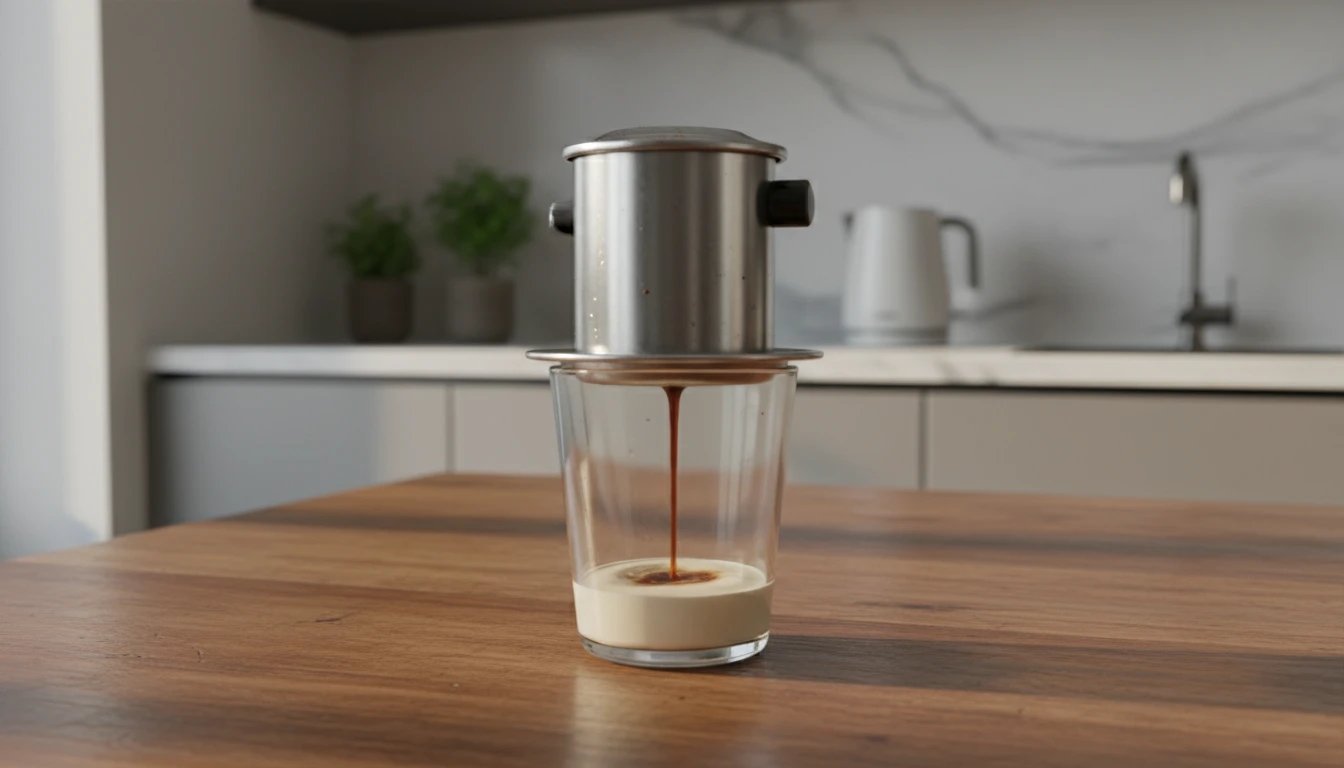
The payoff comes when those final drops fall into condensed milk below, creating the signature layered appearance before you stir. This methodical approach isn’t complicated, but it does reward attention to detail with coffee that tastes distinctly different from anything else in your cup.
What Sets Vietnamese Coffee Apart
The distinctive character of phin coffee stems from three interconnected elements: the beans, the brewing method, and the cultural context that brings them together. While many coffee traditions emphasize clarity and brightness, Vietnamese coffee deliberately pursues richness and intensity—a philosophical difference that shapes every aspect of the experience.
Robusta beans dominate Vietnamese coffee production, representing roughly 97% of the country’s output. These beans naturally contain nearly twice the caffeine of arabica varieties while developing deep, chocolatey notes during roasting. The phin’s slow extraction amplifies these qualities, creating a concentrated brew that stands up remarkably well to sweetened condensed milk—a pairing born from historical necessity when fresh dairy was scarce.
The brewing temperature plays an often-overlooked role. The phin operates at lower temperatures than espresso machines, typically around 195-205°F rather than the 200-212°F range of drip coffee. This gentler extraction draws out oils and compounds that might turn bitter under higher heat, producing a smooth yet powerful cup that feels almost syrupy in texture. The result is coffee that doesn’t merely wake you up—it demands your full attention.
Choosing the Right Vietnamese Coffee Maker for You
Selecting a vietnamese drip filter comes down to three practical considerations: material, size, and filter design. The material affects heat retention and durability—stainless steel models maintain temperature consistency throughout the brew, while aluminum versions offer lightweight portability at a lower price point. Traditional designs use both materials effectively, though stainless steel resists corrosion better over time.
Size matters more than most realize. Single-serve phins (4-6 oz capacity) suit individual morning rituals, while larger 8-12 oz models accommodate Western-style portions or sharing. The chamber diameter influences extraction—wider filters create shallower coffee beds that brew faster but may sacrifice some depth, while narrower designs produce slower, more concentrated results.
Filter plate design represents the critical variable. Screw-press mechanisms offer precise control over coffee bed compression, directly impacting drip rate, and extraction strength. Gravity-fed plates work well for consistent blends but provide less adjustment flexibility. A quality phin should feel substantial in hand, with a plate that moves smoothly and sits flush against the chamber walls to prevent channeling—the enemy of even extraction.
Common Misconceptions About Vietnamese Coffee Makers
The traditional vietnamese coffee brewer faces several persistent myths that discourage newcomers. The most common misconception suggests these brewers require special skills or extensive training to operate. In practice, the phin filter involves just three basic steps: add grounds, pour water, and wait. What Makes the Phin Filter Unique? demonstrates that anyone can achieve consistent results on their first attempt.
Another widespread belief claims Vietnamese coffee must taste bitter or overly strong. However, the concentrated result isn’t inherently harsh—it reflects the brewing ratio and coffee selection rather than the method itself. Adjusting grind size and water temperature produces everything from bold to mellow profiles.
A third misconception assumes all phin filters brew identically. Material composition and filter plate design significantly affect flow rate and extraction. Stainless steel models typically brew faster than aluminum versions, while screw-press designs offer more control than gravity-fed alternatives. Understanding these variations helps match the brewer to personal preferences rather than accepting a one-size-fits-all approach.
Practical Scenarios: Implementing Vietnamese Coffee in Daily Life
The Vietnamese coffee ritual adapts surprisingly well to different daily routines. Morning commuters discover that brewing phin coffee requires minimal active attention—set up the stainless steel phin before showering, and the coffee drips slowly while you prepare for the day. The 15-20 minute total process fits naturally into morning routines without demanding constant oversight.
Remote workers find the phin particularly valuable during focused work sessions. One practical approach involves brewing directly over a thermal mug, allowing the coffee to remain hot throughout the slow extraction. The meditative brewing process creates a natural transition between tasks—what typically happens is the five-minute wait becomes a deliberate pause rather than wasted time.
Weekend scenarios showcase the brewer’s versatility. Hosting brunch becomes distinctive when each guest receives their own brewing phin, transforming coffee service into a participatory experience. The equipment’s compact footprint means multiple filters fit easily on a small tray. However, timing coordination requires attention—staggering brew starts by two minutes ensures all servings finish within a manageable window, keeping condensed milk from settling too firmly at the bottom.
Vietnamese Coffee Maker How to Use
The brewing process requires just four steps. Start by placing 2-3 tablespoons of medium-coarse ground coffee into the chamber—fine grinds clog the filter while coarse ones produce weak coffee. Position the press plate evenly on the grounds and screw gently until you feel slight resistance, not tight enough to compress the coffee completely.
Pour approximately 20ml of hot water (195-205°F) to bloom the grounds for 20-30 seconds. This pre-infusion releases trapped gases and primes the coffee for optimal extraction. Fill the brewer with the remaining hot water—typically 4-6 ounces depending on your desired strength—and cover with the lid to maintain temperature.
The drip rate reveals everything about proper setup. A ceramic phin or stainless steel model should produce one drop per second, completing the brew in 4-5 minutes. Faster dripping indicates loose grounds or insufficient compression, while slower rates suggest over-tightening. Adjust the press plate position between brews to find your perfect extraction timing.
What is a Vietnamese coffee maker called?
The Vietnamese coffee maker carries the name phin (pronounced “fin”), derived from the French word “filtre.” Vietnamese Coffee Supply notes this linguistic connection reflects Vietnam’s colonial history, when French coffee culture merged with local brewing traditions. The term appears interchangeably as “phin filter,” “Vietnamese drip filter,” or simply “coffee phin.”
Unlike Western drip systems or espresso machines, the phin operates as a single-serving gravity brewer. Its straightforward design—comprising just four metal components—has remained essentially unchanged for decades. Vinwonders explains that this simplicity contributes to its enduring presence in Vietnamese households and cafés, where reliability matters more than technological complexity.
The phin’s name distinguishes it from other slow-drip methods like pour-over or cold brew towers. However, the specific terminology matters less than understanding its function: a compact filter that produces concentrated coffee through patient extraction, setting up the unique characteristics and considerations that make Vietnamese coffee distinct from other brewing methods.
Limitations and Considerations
While the phin offers authentic Vietnamese coffee brewing, it requires patience that modern coffee drinkers may find challenging. A typical brew cycle takes 4-7 minutes, making it impractical for rushed mornings. According to Nguyen Coffee Supply, rushing the process by using finer grinds creates clogged filters and bitter extraction.
The single-serve design limits capacity—brewing for multiple people means sequential brewing or purchasing multiple filters. Temperature control presents another hurdle: the phin lacks built-in heating, so maintaining optimal water temperature throughout brewing demands attention. Cafely notes that water cooling during the slow drip can lead to under-extraction.
Storage and portability favor the compact phin, yet it sacrifices the convenience of programmable brewing. However, these “limitations” define the meditative ritual that Vietnamese coffee culture celebrates—slow brewing encourages mindful appreciation rather than caffeinated multitasking.
Key Takeaways
The phin filter represents more than brewing equipment—it’s a gateway to Vietnamese coffee culture that transforms your morning routine into a deliberate ritual. This simple four-piece device produces coffee with double the strength of conventional drip methods, creating a concentrated base that stands up beautifully to condensed milk or ice.
Success with a phin hinges on understanding its intentionally slow extraction. The 4-7 minute brew time isn’t a limitation but the mechanism that draws out coffee’s rich oils and complex flavors. Using coarse-ground robusta beans and maintaining water between 195-205°F ensures optimal extraction without bitterness.
The phin’s portability and zero-electricity design make it ideal for travelers and minimalists alike. However, patience remains essential—rushing the process by adjusting the filter pressure mid-brew typically results in under-extracted, weak coffee. Mastering this traditional method opens up authentic Vietnamese coffee experiences, from classic cà phê sữa đá to experimental modern variations.
How do you use a Vietnamese coffee maker?
Mastering the phin requires just four straightforward steps that transform ground coffee into concentrated brew. Start by placing the brew chamber over your cup and adding 2-3 tablespoons of medium-coarse coffee—roughly the texture of sea salt. The grind size matters: too fine creates over-extraction, while too coarse produces weak coffee.
Next, gently press the filter disk onto the coffee grounds with light, even pressure. Nguyen Coffee Supply recommends avoiding compression, as this allows water to flow properly during brewing. Pour a small amount of near-boiling water (195-205°F) to bloom the grounds for 30-45 seconds, releasing trapped carbon dioxide.
Finally, fill the chamber completely and let gravity work. The ideal drip rate is one drop per second—a mesmerizing rhythm that takes 4-6 minutes to complete. If water flows too quickly, tighten the filter disk slightly on your next brew; if it barely drips, loosen the pressure or adjust your grind coarser.
The result is a concentrated coffee base ready for sweetened condensed milk or ice, bringing you one step closer to authentic Vietnamese coffee culture that awaits exploration.
What makes Vietnamese coffee different?
Vietnamese coffee distinguishes itself through three inseparable elements: robusta beans, sweetened condensed milk, and the phin’s unique brewing physics. Unlike pour-over methods that race through extraction, the phin creates pressure through its gravity-fed design, producing concentrated liquid that sits between espresso intensity and drip coffee clarity.
The robusta foundation changes everything—these beans contain twice the caffeine of arabica, deliver earthy, and chocolatey notes that stand up to aggressive sweetness. Most Vietnamese roasters use dark roasting profiles that caramelize the beans’ natural sugars, creating the bold character that defines ca phe sua da. The cultural context matters equally. Where Western coffee culture prizes speed and convenience, Vietnamese preparation embraces the deliberate pace of watching droplets form. That condensed milk isn’t just sweetener—it’s historical necessity from a time when fresh dairy was scarce, now elevated to culinary tradition. The result transforms your typical morning brew into something closer to liquid dessert, balancing bitter complexity with creamy richness in proportions that would overwhelm lighter preparations.
How to make Vietnamese coffee?
The complete brewing process takes four precise steps that transform robusta grounds into concentrated Vietnamese coffee. According to Nguyen Coffee Supply, start by adding 2-3 tablespoons of medium-coarse coffee to the brew chamber, then gently place the gravity press on top without screwing it down. Pour just enough near-boiling water (195-205°F) to bloom the grounds for 30-45 seconds—this releases trapped gases and enhances flavor extraction.
After blooming, fill the chamber completely and let gravity guide the 4-5 minute drip process. Cafely emphasizes that patience during extraction is non-negotiable—rushing by screwing down the press creates bitter, over-extracted coffee. The final step transforms the concentrated brew: stir in 2-3 tablespoons of sweetened condensed milk until the mixture turns caramel-colored, creating the signature creamy sweetness that defines authentic Vietnamese coffee.
Will making Vietnamese coffee with an espresso machine work?
An espresso machine fundamentally changes the coffee’s character rather than replicating authentic Vietnamese coffee. The phin filter creates approximately 9 PSI of pressure through gravity and the weight of water, while espresso machines generate 9 bars (130 PSI) of pressure. This difference produces a completely different extraction profile.
The result tastes closer to a robusta-based espresso than traditional Vietnamese coffee. The high-pressure extraction pulls different compounds from the beans, creating concentrated crema and intense bitterness rather than the phin’s smooth, chocolatey body. According to Nguyen Coffee Supply, the phin’s slow drip allows specific oils and sugars to develop that pressurized brewing cannot replicate.
That said, espresso works as a convenient substitute when time matters more than authenticity. Mix a double shot with sweetened condensed milk over ice for a Vietnamese-inspired drink. However, understanding proper phin technique delivers the genuine article.
Vietnamese Coffee Maker How to Use
The phin filter operates through a gravity-driven steeping process that requires minimal technique once you understand the fundamentals. According to Copper Cow Coffee, the brewing sequence follows a specific rhythm: unscrew and remove the filter press, add two to three tablespoons of medium-coarse grounds, replace the press with gentle pressure to level the coffee bed, pour a small amount of hot water to bloom for 30 seconds, then add remaining water up to the rim.
Temperature control determines extraction quality—water between 195°F and 205°F extracts optimal flavor compounds without scalding the grounds. The drip rate should produce one drop every two seconds, creating that characteristic meditative brewing experience. If coffee drips too quickly, tighten the filter press slightly; if it barely drips, loosen the press or use a coarser grind next time.
The entire process takes approximately four to five minutes, producing a concentrated brew that pairs perfectly with sweetened condensed milk or can be enjoyed black for those who appreciate robusta’s bold character.
What is a Vietnamese coffee maker called?
The Vietnamese coffee maker is officially called a phin filter (or “phin” for short), taking its name from the French word “filtre.” According to Nguyen Coffee Supply, this simple brewing device consists of just four metal components that work together to create Vietnam’s signature slow-drip coffee experience.
You might also hear it referred to as a Vietnamese drip filter or ca phe phin in Vietnamese. The term “phin” has become synonymous with Vietnamese coffee culture itself, representing not just the equipment but an entire brewing philosophy centered on patience and ritual. While variations exist—stainless steel versus aluminum, different sizes, decorative designs—the fundamental phin mechanism remains unchanged from its original design, making it one of the most enduring coffee brewing methods in Southeast Asia.
Key Takeaway: The phin filter represents more than just equipment; it’s a cultural artifact that turns coffee brewing into a meditative practice. Whether you’re using a traditional aluminum phin or a modern stainless steel version, you’re participating in a century-old Vietnamese tradition that prioritizes quality over speed and transforms a simple cup of coffee into an experience worth savoring.
If you’re upgrading your kitchen coffee tools, you can also explore more useful appliances in our kitchen gadgets.