Speed Queen Washer Review: 25 Years of Reliability vs. Modern Features
Understanding Speed Queen Washers: A Legacy of Durability
When commercial-grade durability meets residential convenience, you get speed queen washer models—a brand that’s been engineering laundry equipment since 1908. Unlike mass-market machines designed for planned obsolescence, these washers are built with the same heavy-duty components found in laundromats, where machines endure hundreds of cycles monthly. The result? A washer that routinely outlasts competitors by years, if not decades.
Speed Queen’s reputation stems from a straightforward philosophy: engineer for longevity first, everything else second. While the Speed Queen commercial washer technology forms the foundation of their residential line, the brand has adapted these industrial-strength machines for home use without compromising their legendary toughness. According to Consumer Reports testing, Speed Queen washers consistently demonstrate superior build quality compared to conventional residential models.
The special features of Speed Queen washers center on mechanical simplicity and proven engineering. You won’t find touch screens or smart connectivity here—instead, you’ll discover a stainless steel wash tub, commercial-grade bearings, and a robust drive system designed to handle 10,400 cycles (roughly 25 years of typical use). For those wondering “is Speed Queen still a good choice” in an era of high-efficiency machines, the answer depends on priorities: if longevity and repair-free operation matter more than premium efficiency ratings, these washers deliver unmatched value.
Finding a “Speed Queen washer near me” often means visiting independent appliance dealers rather than big-box retailers—a distribution strategy that reflects the brand’s focus on quality over volume. For more insights on building a durable and efficient home, explore our Cleaning & Organization category.
Table of Contents
Features and Benefits of Speed Queen Washers
Speed Queen washers distinguish themselves through commercial-grade construction that translates directly into residential performance advantages. The brand’s commitment to durability manifests in several standout features that justify their position in the premium appliance market.
Heavy-Duty Construction Built to Last
At the core of every speed queen washer sits a stainless steel wash tub designed to withstand decades of use without rusting or chipping. According to Consumer Affairs customer reviews, owners consistently praise the solid metal construction that stands in stark contrast to plastic-heavy competitors. The all-metal transmission and suspension system create a machine that handles imbalanced loads without the excessive vibration common in lighter-built alternatives.
The TR7 model features a straightforward mechanical design with fewer electronic components—a deliberate engineering choice that reduces potential failure points. This approach yields an average lifespan of 25 years, far exceeding industry standards.
Superior Cleaning Performance and Efficiency
Speed Queen washers deliver exceptional cleaning power through a combination of agitator action and proper water levels. The multiple cycle options include Normal, Heavy Duty, Delicate, and Permanent Press settings that accommodate various fabric types without compromising cleaning effectiveness.
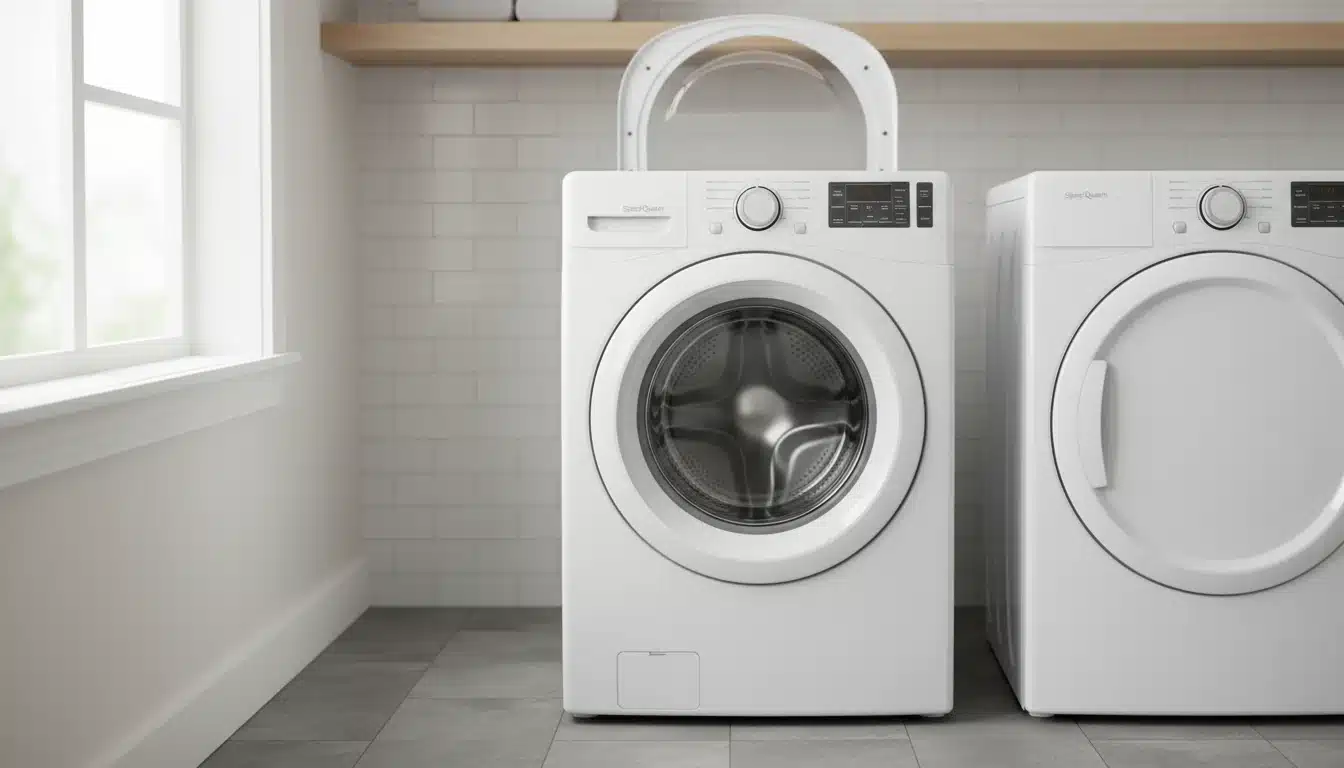
When comparing a Speed Queen washer and dryer set, the coordinated engineering ensures optimal moisture extraction during the spin cycle, reducing drying time and energy consumption. The washers handle large loads up to 18 pounds in top-load models, making them practical for families and those laundering bulky items like comforters regularly.
For Speed Queen washer maintenance tips, the simple mechanical design requires minimal intervention—primarily routine cleaning of the lint filter and periodic inspection of hoses. In discussions around Speed Queen vs Maytag reliability, the former’s commercial heritage becomes apparent: fewer service calls and longer operational life between repairs create tangible long-term value despite higher upfront costs. This focus on longevity mirrors what we look for in other home investments, such as the best home gym equipment 2026.
Why Choose Speed Queen: Cost vs. Value Analysis
The upfront investment in a speed queen washer typically ranges from $1,000 to $1,400, positioning it significantly above mass-market alternatives. However, this premium pricing tells only part of the financial story. When evaluating Speed Queen washer reviews, a consistent pattern emerges: owners report minimal repair costs over decades of use, contrasting sharply with high-efficiency washers that often require expensive electronic component replacements within 5-7 years.
Is Speed Queen a good brand? for long-term value? The mathematics are compelling. According to three-year ownership data, Speed Queen washers maintain consistent performance without the service calls that plague cheaper alternatives. A typical household might replace three conventional washers during the lifespan of a single Speed Queen unit—an effective cost difference that narrows considerably when calculated across 25 years.
The High-Efficiency Tradeoff
The debate between high-efficiency washers vs Speed Queen centers on different value propositions. HE machines promise lower water and energy consumption, typically saving $50-$75 annually in utilities. However, Speed Queen’s mechanical simplicity translates to repair costs averaging under $100 over ten years, while complex HE models often face $300-$500 repair bills for control board failures or pump replacements.
Customer satisfaction data from Consumer Affairs reveals that Speed Queen owners report 4.2/5 satisfaction ratings, with durability cited as the primary justification for the premium price. The analysis suggests the investment pays dividends for households prioritizing appliance longevity over short-term savings—a calculation that becomes increasingly favorable with each avoided replacement cycle.
Speed Queen Washer Models and Their Specifications
Speed Queen washer models fall into two primary categories: top-loading and front-loading machines, each engineered to deliver commercial-grade performance in residential settings. Understanding the specifications and differences between these models helps determine which configuration best serves specific laundry requirements.
Top-Loading Models: The TR Series
The TR7 and TR5 represent Speed Queen’s flagship top-loading washers, offering 3.2 to 5.2 cubic feet of capacity—sufficient for typical household loads up to king-size comforters. These models feature dual-action agitators (TC5) or low-profile impellers (TR Series), providing different cleaning actions. According to Consumer Reports testing, the agitator design delivers thorough cleaning, while the impeller models offer better energy efficiency.
The TR series includes five preset cycles with simple mechanical controls, deliberately avoiding complex digital interfaces. One common question from potential buyers: “does Speed Queen washer not spinning?” typically relates to misunderstanding the deep-fill wash action, which prioritizes water volume over high-speed agitation during certain cycles. For troubleshooting help, our guide on decluttering tips for home 2026 includes laundry room organization strategies that can help prevent issues.
Front-Loading Models: The FF Series
Speed Queen’s front-loading washers offer 4.2 to 5.0 cubic feet capacity and advanced efficiency features. These models incorporate inverter-driven motors and multiple wash/spin combinations, providing greater flexibility than top-loaders while maintaining the same commercial construction standards.
The fundamental trade-off: top-loaders provide faster cycle times (approximately 30-40 minutes) and familiar operation, while front-loaders deliver superior energy efficiency and gentler fabric care. When evaluating the best brand of washer and dryer, this choice often depends on whether speed or efficiency takes priority in your household routine.
Buying Guide: How to Choose the Right Speed Queen Washer
Selecting the right speed queen washer requires evaluating three critical dimensions: available space, budget allocation, and household laundry demands. Understanding these factors upfront ensures your investment aligns with both practical constraints and long-term value expectations.
Space and Installation Considerations
Measure your laundry area precisely before committing to a model. Top-loading Speed Queens typically require 27-28 inches of width and adequate overhead clearance for lid operation, while front-loaders need 3-4 inches of additional space behind the unit for hose connections and ventilation. If stacking is necessary, front-load models offer more flexibility for vertical installations in compact spaces. If you’re designing a multi-purpose area, you might also consider space-saving ideas from our home office desk guide.
Model Selection Checklist
Start by assessing your weekly laundry volume. Households washing 8-10 loads per week benefit most from the TR7’s simple mechanical controls and Speed Queen washer durability, which handles intensive use without electronic component failures. For those prioritizing water efficiency alongside longevity, the FF7 front-loader balances performance with modern expectations while maintaining the exceptional Speed Queen washer’s lifespan of 25 years.
Consider control preferences carefully. The TR7’s mechanical dial system means fewer potential points of failure—if you ever need to fix Speed Queen top-load washer issues, mechanical components are generally more accessible and affordable than electronic control boards found in other models.
Finding Authorized Retailers and Value
Purchase exclusively through authorized dealers to preserve warranty coverage and ensure genuine parts. While online marketplaces may advertise discounts, unauthorized sellers cannot guarantee factory support. Check Speed Queen’s dealer locator for local options, and inquire about floor model discounts during new model release periods—typically spring and fall—when retailers clear inventory at 10-15% reductions.
Common Misconceptions About Speed Queen Washers
Despite their commercial pedigree, Speed Queen washers face several persistent myths that warrant clarification. Understanding the reality behind these misconceptions helps buyers make informed decisions about their laundry investment.
The Water Consumption Myth
A common criticism of the top loading speed queen washer centers on water usage. While these machines do use more water than modern high-efficiency models—typically 30-40 gallons per cycle—this design choice is intentional. The deep-fill wash action ensures thorough cleaning that many HE machines struggle to match. According to Consumer Reports, this traditional wash method delivers superior soil removal, particularly for heavily soiled items.
Addressing the Price-Quality Question
Why is Speed Queen expensive? compared to mainstream brands? The answer lies in construction quality and longevity. While a typical washer costs $600-800 and lasts 8-10 years, Speed Queen machines range from $1,000-1,700 but deliver 25-year lifespans. This translates to a lower cost per year of ownership—roughly $40-68 annually versus $60-100 for cheaper alternatives.
Maintenance and Longevity Reality
The notion that commercial-grade machines require extensive maintenance is unfounded. Speed Queen washers feature fewer electronic components that can fail, making them mechanically simpler than computerized models. However, the Speed Queen size concern is legitimate—these machines maintain traditional dimensions that may not fit compact laundry spaces designed for modern stackable units. For those with space constraints, our smart home category offers space-saving technology ideas.
Key Speed Queen Commercial Washer Takeaways
Speed Queen washers represent a compelling solution for households seeking the best washing machine for long-term use. While the Speed Queen washer’s price starts around $1,200—significantly higher than mass-market alternatives—this premium reflects genuine engineering advantages: commercial-grade construction, superior cleaning performance, and warranties that actually align with product longevity.
The decision ultimately hinges on matching features to household demands. Capacity needs, available space, and budget constraints should guide model selection, whether choosing a compact unit for an apartment or a full-size model for family use.
For prospective buyers researching options, communities like Speed Queen washer Reddit discussions provide valuable real-world perspectives that complement professional reviews. These forums consistently emphasize three themes: initial sticker shock followed by satisfaction with durability, appreciation for straightforward controls, and recognition that total cost of ownership often favors Speed Queen over frequent appliance replacement.
The investment makes sense for those who value reliability over features, simplicity over connectivity, and proven performance over marketing claims. Speed Queen doesn’t offer the most advanced technology or the lowest purchase price—it offers something increasingly rare: a washing machine designed to last decades rather than years. For more product categories built on similar principles, explore our reviews of best smart thermostats 2026 or best robot vacuums 2026.
Frequently Asked Questions
What makes Speed Queen washers different from other brands?
Speed Queen washers feature commercial-grade construction designed for longevity, utilizing heavy-duty components like stainless steel tubs and all-metal transmissions that outlast conventional models.
How long can I expect a Speed Queen washer to last?
A Speed Queen washer typically has a lifespan of about 25 years, significantly exceeding the 8-10 year industry standard due to its durable mechanical design and minimal electronic components.
What are the key features of Speed Queen washer models?
Speed Queen washers are known for their stainless steel wash tubs, all-metal construction, mechanical simplicity (fewer electronics), and either traditional agitator (TC5) or modern impeller (TR Series) wash actions.
Are Speed Queen washers worth the higher price?
While Speed Queen washers range from $1,000 to $1,700, their 25-year lifespan and low repair costs often provide better long-term value—approximately $40-68 per year—compared to cheaper alternatives requiring replacement every 8-10 years.
How do Speed Queen washers compare to high-efficiency models?
Speed Queen washers prioritize durability and repair simplicity over utility savings, while high-efficiency models offer lower water/energy consumption but often incur higher repair costs for electronic components over time.