What is a Riser Desk? Your Complete Guide to Sit-Stand Converters
Introduction to Riser Desks
Picture your workspace transforming in seconds—from seated comfort to standing height—without replacing your entire desk. That’s exactly what is a riser desk delivers. This adjustable platform sits atop your existing desk, creating a desk riser for productivity that lets you alternate between sitting and standing positions throughout your workday.
The shift toward sit-stand workstations has accelerated dramatically. According to workplace ergonomics data, standing desks and desk converters have become essential components of modern ergonomic setups, with employers and remote workers alike recognizing their value. Unlike full standing desks that require significant investment and space commitment, riser desks offer an accessible entry point into dynamic working.
The benefits of desk riser setups extend beyond convenience. Research consistently links prolonged sitting to various health concerns, making the ability to reduce sedentary behavior a compelling advantage. When you stand intermittently during work, you’re encouraging better circulation, engaging core muscles, and creating opportunities to enhance posture naturally. These platforms typically adjust from standard desk height (around 29 inches) to standing height (42-50 inches), accommodating different body types and preferences.
Whether you’re addressing back discomfort, boosting afternoon energy levels, or simply seeking more movement in your routine, understanding what is a riser desk helps you recognize it as a practical solution that adapts to your existing workspace rather than demanding you rebuild it entirely. For more home office improvements, explore our Home Office category.
Table of Contents
What You’ll Need to Set Up a Riser Desk
Setting up a desk riser is refreshingly straightforward, but gathering the right components beforehand ensures a smooth transition to healthier work habits. At minimum, you’ll need three essentials: the desk riser unit itself, a stable existing desk to place it on, and an adjustable chair that accommodates both sitting and standing postures.
Essential Components for Success
The core component—your desk riser unit—requires careful consideration. Weight capacity varies significantly, with most quality models supporting 15-35 pounds of equipment. Before purchasing, calculate the combined weight of your monitor, laptop, keyboard, and accessories. A riser struggling under excessive load won’t just fail to enhance productivity—it becomes a safety hazard.
Desk compatibility matters more than most people realize. Your existing desk surface should provide a flat, stable foundation at least 24 inches deep to prevent front-heavy tipping. Measure your workspace dimensions first, as desk riser vs standing desk comparisons often highlight that risers require adequate clearance for height adjustment mechanisms.
Tools and Preparation
Most desk risers arrive partially assembled, requiring only basic tools like an Allen wrench (typically included). However, if you’re using a desk riser for back pain relief, consider adding an anti-fatigue mat for standing periods—a simple addition that significantly improves comfort during extended use. Similar to how a best ergonomic office chair supports proper sitting posture, an anti-fatigue mat supports standing comfort.
Step-by-Step: Setting Up Your Riser Desk
Getting your standing desk riser up and running takes less time than your morning coffee break—typically 15 to 30 minutes from box to first use. The beauty of a space-saving desk riser vs full desk setup lies in its simplicity: no furniture hauling, no professional installation, just straightforward assembly on your existing workspace.
Step 1: Choose a Stable Foundation
Start by selecting a sturdy existing desk with enough surface area to accommodate your riser comfortably. Your base desk should remain stable when the riser elevates—wobbling defeats the entire purpose. Measure your workspace carefully: most risers require 24 to 36 inches of width and at least 20 inches of depth. Ensure there’s adequate clearance above for the raised platform.
Step 2: Assemble Following Manufacturer Guidelines
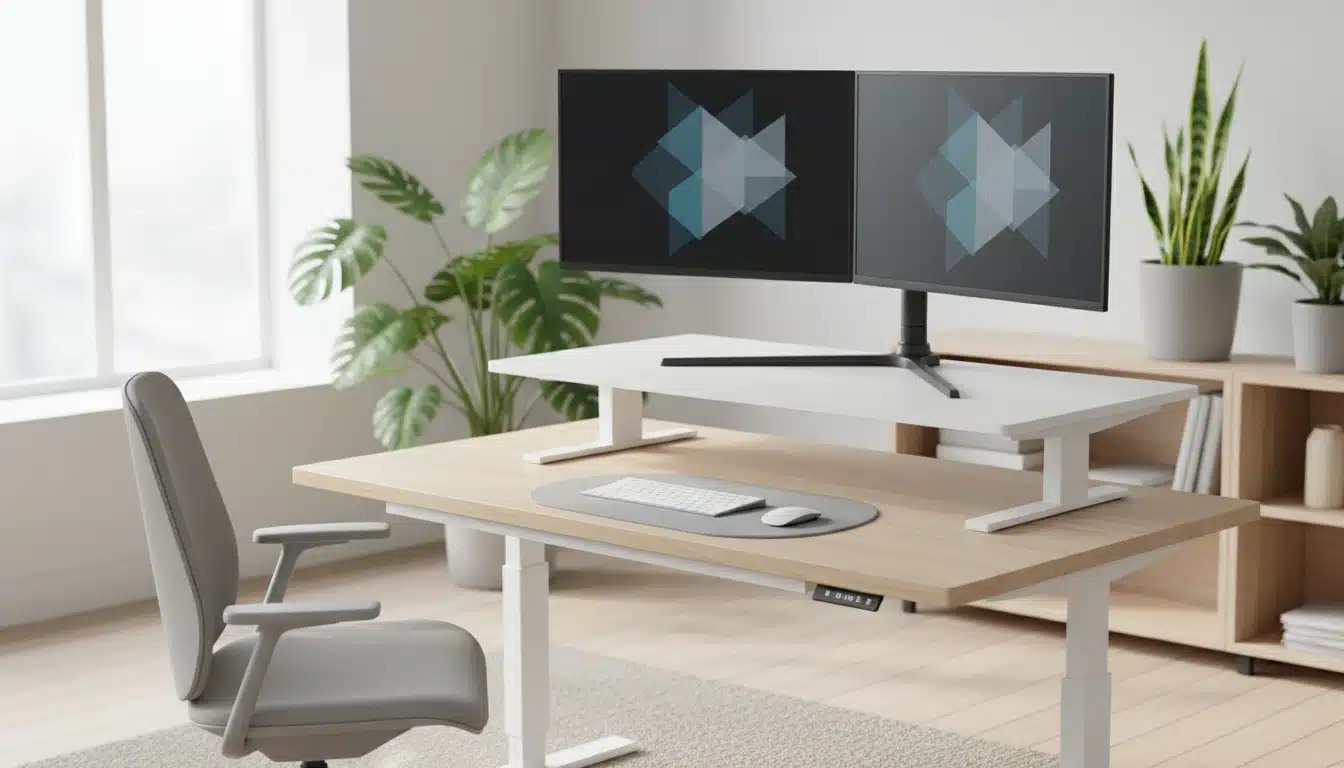
Unbox your riser and the desk riser’s function becomes immediately clear: most feature a simple two-tier design with a top platform for monitors and a lower keyboard tray. Follow the included assembly instructions precisely—typically you’ll attach support arms, secure the keyboard platform, and test the height adjustment mechanism. Most models arrive 80% assembled, requiring only basic hardware tightening.
Step 3: Position Components for Ergonomic Success
Place your monitor on the upper tier so the top of the screen aligns with your eye level when standing. Position the keyboard tray so your elbows form a 90-degree angle with forearms parallel to the floor. This dual-height arrangement lets you switch between sitting and standing throughout the day—a pattern that helps boost energy and combat afternoon fatigue. Test both positions before loading cables and accessories to ensure comfortable transitions.
For additional workspace optimization tips, check out our guide on best home office desk options.
Understanding the Benefits of Riser Desks
The adjustable desk riser delivers tangible health benefits that extend far beyond simple workspace aesthetics. By enabling regular transitions between sitting and standing throughout your workday, these versatile platforms actively combat the physical toll of prolonged sedentary behavior.
Posture Improvement and Pain Reduction
Standing periodically encourages natural spinal alignment and reduces the compression forces that develop during extended sitting. Research from What is a Riser Desk demonstrates that alternating positions every 30-60 minutes helps alleviate lower back discomfort—a complaint affecting nearly 80% of desk workers at some point in their careers. The dynamic movement pattern strengthens core stabilizers while reducing muscle fatigue.
Metabolic and Productivity Gains
Standing burns approximately 50 more calories per hour than sitting, a modest but meaningful difference that compounds over weeks and months. However, the cognitive benefits often prove more immediate: many users report sharper focus and sustained energy levels when they incorporate standing intervals into their routine.
When considering standing desk vs monitor riser options, an cost-effective desk riser provides the movement benefits without requiring workspace overhaul. The key isn’t standing constantly—it’s the regular position changes that reduce static strain and keep both body and mind engaged throughout the workday. For more ways to enhance productivity at home, explore our Home Office category.
Riser Desk vs. Standing Desk: Making the Right Choice
The decision between a sit-stand desk converter and a full standing desk often comes down to three critical factors: your workspace constraints, budget flexibility, and future needs. Understanding these differences helps you make an investment that truly serves your work style.
Cost and Space Considerations
Compact desk riser units offer remarkable cost advantages—typically ranging from $150 to $400 compared to $400 to $1,200 for electric standing desks. They preserve your existing workspace while adding height-adjustment capability in minutes. This plug-and-play simplicity means you’re not replacing furniture; you’re enhancing what already works.
However, traditional standing desks provide superior workspace real estate and stability. What typically happens is that users with multiple monitors, extensive paperwork, or frequent video calls find full desks offer more breathing room. The integrated surface eliminates the dual-level setup inherent to risers, creating a cleaner aesthetic.
When to Choose Each Option
Why choose desk riser over a full desk? Three scenarios stand out:
- Rental situations where furniture modifications aren’t permitted
- Budget-conscious home offices seeking gradual ergonomic upgrades
- Professional environments testing standing workflows before larger commitments
On the other hand, if you’re setting up a permanent workspace from scratch or your work involves collaborative in-person meetings requiring presentation space, the investment in a full standing desk delivers better long-term value.
One practical approach is starting with a converter to validate your commitment to standing work. After 90 days of consistent use, you’ll know whether the transition to a full desk makes sense—or whether your space-saving desk riser already meets your needs perfectly.
Example Scenarios: Riser Desks in Action
The Compact Home Office Transformation
Meet Sarah, a graphic designer working from a spare bedroom with barely enough room for a traditional desk. Installing a full standing desk wasn’t feasible given her 4×6 foot workspace. Instead, she chose a portable desk riser that sits atop her existing writing desk. Within minutes of unboxing, she positioned her laptop and external monitor on the platform. Now she alternates between sitting and standing throughout her workday—no renovation required, no furniture replaced. The height adjustable desk riser accommodates her 5’4″ frame perfectly, and when she needs maximum desk space for sketching, she simply lowers the platform flush with the surface.
Corporate Wellness on a Budget
A mid-sized marketing firm faced a common challenge: twenty employees requesting ergonomic improvements, but limited budget for complete desk replacements. Their solution? Implementing inexpensive desk risers across the department at roughly one-third the cost of new furniture. Each team member received a converter unit that transforms their existing workstation into a sit-stand setup. The facilities manager reported that 85% of employees now alternate positions at least three times daily, and the adjustable platforms integrate seamlessly with their existing monitor arms and keyboard trays.
The Freelancer’s Productivity Edge
James, a freelance writer, noticed his afternoon energy crashes coincided with prolonged sitting. Rather than investing in an entirely new workspace, he added a desk riser to his current setup. Between client calls and writing sessions, he raises the platform to stand while editing or researching. This movement pattern—what he calls “task-based positioning”—keeps him engaged throughout marathon writing days without the commitment or expense of replacing his inherited oak desk.
Common Misconceptions About Riser Desks
Despite the growing popularity of ergonomic solutions, several myths persist about desk converters and their actual benefits. Understanding these misconceptions helps ensure you use your ergonomic desk riser effectively and set realistic expectations.
Standing All Day Isn’t the Goal
One of the biggest misconceptions about the advantages of standing desk setups is that standing for extended periods delivers superior health outcomes. In reality, what typically happens is that excessive standing—without alternating with sitting—creates its own set of problems including lower back strain, leg fatigue, and circulation issues. The sweet spot lies in movement and variation, not simply replacing one static position with another. A common pattern is alternating between sitting and standing every 30-60 minutes rather than committing to hours of continuous standing.
Not Just a Budget Standing Desk
Many people confuse desk converters with full standing desks, assuming they’re essentially the same product at different price points. However, a converter transforms your existing workspace while preserving your current desk investment. Full standing desks replace your entire workstation. This distinction matters because converters offer flexibility and portability that permanent solutions can’t match—you can move them between workspaces or remove them entirely when needed.
Ergonomics Require Personalization
Another widespread myth suggests that any desk converter automatically solves ergonomic challenges. In practice, proper setup matters enormously. Monitor height, keyboard position, and standing surface all require individual adjustment based on your height, arm length, and specific tasks. One practical approach is treating your riser as part of a larger ergonomic system rather than an instant fix-all solution.
For more on creating an ergonomic workspace, read our best ergonomic office chairs of 2026 guide.
Limitations and Considerations When Using Riser Desks
While the top benefits of desk riser solutions include improved posture and the ability to burn calories during work hours, these converters aren’t without their challenges. Understanding potential limitations helps set realistic expectations and ensures successful implementation.
Ergonomic Setup Challenges
The most common pitfall is incorrect positioning. A riser desk that places your monitor too high or keyboard at an awkward angle creates new ergonomic problems instead of solving existing ones. Monitor arms can sometimes provide better height adjustment than fixed risers, particularly for users with specific vision or posture needs. Your arms should form 90-degree angles when typing, with the screen positioned at or slightly below eye level—compromising these fundamentals defeats the purpose.
The Adaptation Period
Transitioning to standing work requires patience. Starting with 15-minute intervals and gradually increasing duration over several weeks prevents fatigue and discouragement. Your body needs time to build standing stamina, and rushing this process often leads to abandonment of the entire setup.
Investment Considerations and Space Trade-offs
Quality workspace organization becomes more complex with converters occupying valuable desk real estate. Budget models starting under $100 may wobble or lack smooth adjustment mechanisms, while premium options approaching $400 deliver stability but represent significant investment. Desktop risers reduce available work surface, which matters considerably in compact home offices where every inch counts. However, this cost remains substantially lower than full standing desk replacement.
For space-saving ideas, explore our decluttering tips for home 2026 guide.
Key Takeaways: What is a Riser Desk and Is It Right for You?
So, what is a riser desk exactly? It’s a practical, budget-friendly solution that transforms your existing workspace into a sit-stand workstation without requiring a complete desk replacement. These converters sit atop your current desk, allowing you to alternate between sitting and standing throughout your workday.
When used correctly with proper ergonomic setup, riser desks can help alleviate back pain by encouraging better posture and regular position changes. The key lies in adjusting the height so your monitor sits at eye level and your elbows rest at 90-degree angles while typing. However, remember that simply having a riser desk isn’t enough—you need to actually use it and transition positions regularly to reap the benefits.
Quick Decision Guide
| Scenario | Best Solution |
|---|---|
| Renting apartment, can’t replace furniture | Riser desk |
| Setting up permanent home office from scratch | Full standing desk |
| Limited budget but need ergonomic upgrade | Riser desk |
| Multiple monitors and extensive paperwork | Full standing desk |
| Testing standing work before committing | Riser desk |
Before investing in an affordable standing desk riser, evaluate your specific workspace constraints and personal requirements. Consider your available desktop space, budget limitations, and whether you need single or dual-monitor capacity. For budget-conscious buyers, manual-adjustment models offer excellent value, while those seeking convenience might prefer electric or spring-assisted options.
The bottom line? Riser desks provide an accessible entry point into active workstation design. Start with shorter standing intervals, gradually increasing duration as your body adapts, and you’ll likely discover improved focus and reduced discomfort throughout your workday.
For more home office optimization tips, visit our Home Office category or check out best home office desk recommendations.
Frequently Asked Questions
What is a riser desk and how does it work?
A riser desk is an adjustable platform that sits on top of your existing desk, allowing you to raise your monitor and keyboard to standing height. It typically features a two-tier design with mechanical or gas-spring lift mechanisms for smooth height adjustment.
Are riser desks worth the investment?
Yes, for most people. Riser desks cost significantly less than full standing desks ($150-$400 vs $400-$1,200) and provide most of the same health benefits, including reduced back pain, improved posture, and increased daily movement.
How much weight can a desk riser hold?
Most quality desk risers support 15-35 pounds. Always check the manufacturer’s specifications and calculate the combined weight of your monitor, laptop, keyboard, and accessories before purchasing.
Can I use a riser desk with dual monitors?
Yes, many riser desks are designed specifically for dual monitor setups. Look for models with wider platforms (36 inches or more) and higher weight capacities (30+ pounds) to accommodate two screens safely.
What’s the difference between a riser desk and a standing desk?
A riser desk sits on top of your existing furniture, converting it for standing use. A full standing desk replaces your entire workstation. Riser desks are more portable and affordable, while full standing desks offer more workspace and a cleaner aesthetic.
How long should I stand using a riser desk?
Start with 15-30 minute standing intervals and gradually increase duration. The ideal pattern is alternating between sitting and standing every 30-60 minutes throughout your workday, rather than standing for hours continuously.