Measuring Mastery: The Versatile 1 0z Cup for Portion Control
Table of Contents
Introduction: Understanding the 1 0z Cup – Small but Mighty
The 1 oz portion cup might measure just an ounce, but its impact on portion control is anything but small. These compact containers represent a precision tool in a world where serving sizes have steadily expanded—research shows that larger portions directly correlate with increased calorie consumption, making accurate measuring essential for dietary awareness.
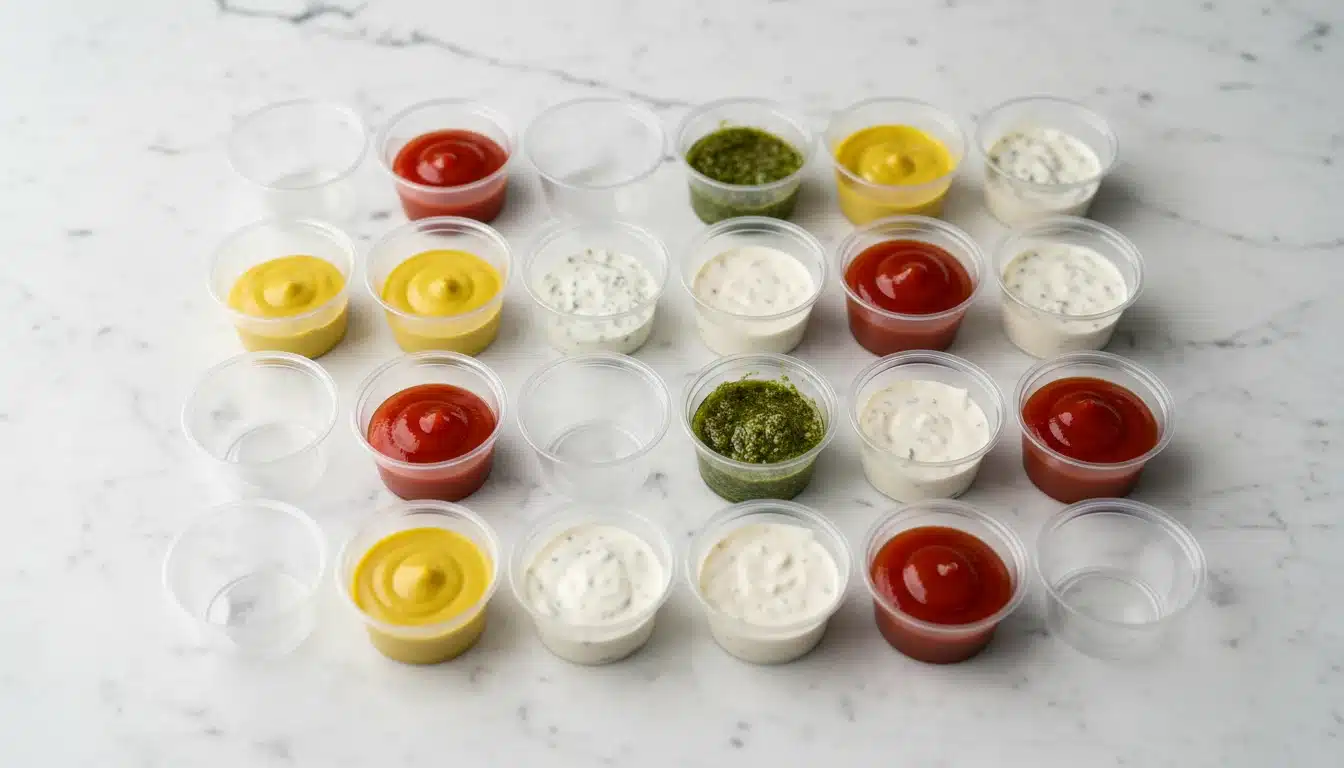
At their core, 1 oz cups are specialized measuring vessels designed to hold exactly one fluid ounce or approximately two tablespoons (29.57 milliliters) of liquid or semi-solid substances. What makes them particularly valuable is their ability to standardize portions across various contexts—from disposable 1 oz portion cups with lids for condiments in restaurants to reusable options for home meal prep. The small size forces intentional serving decisions rather than the haphazard “eyeballing” that typically leads to overconsumption.
Most 1 oz cups come in two material categories: disposable and reusable. Disposable versions typically use food-grade polypropylene plastic, offering the convenience of single-use applications ideal for food service operations. Many feature snap-on lids that create a secure seal, preventing spills during transport. Reusable alternatives include BPA-free plastics, glass, and stainless steel—each offering distinct advantages. Glass provides chemical-free storage without staining, while stainless steel delivers exceptional durability. Mini cups with lids offer portability that transforms them from simple measuring tools into complete portion-control systems you can take anywhere.
The precision of standardized measuring tools has proven effective in portion control strategies, with controlled studies demonstrating measurable improvements in serving accuracy when individuals use designated portion tools rather than estimation methods.
For more kitchen organization ideas, explore our Kitchen Gadgets category.
The Problem with Portion Control
Portion control remains one of the most persistent challenges in managing a healthy diet. Research shows that many people struggle to accurately estimate serving sizes, often underestimating portion sizes by 20-40%. This disconnect between perceived and actual portions creates a ripple effect that undermines dietary goals, whether you’re trying to lose weight, manage a health condition, or simply maintain balanced nutrition.
The stakes are higher than most realize. Improper portion sizes don’t just add extra calories—they fundamentally distort our understanding of what constitutes a normal serving. When restaurants serve pasta dishes containing four times the recommended portion, our internal calibration shifts. What looks like a single serving becomes, in reality, a meal designed for multiple people. This portion distortion affects everything from calorie intake to nutrient balance.
What are 1 oz portion cups used for? They’re designed to solve this exact problem by providing a foolproof reference point. A portion cup eliminates the guesswork that plagues eyeballed measurements. Whether you’re measuring salad dressing, nuts, or cooking oils, these standardized containers ensure you’re not accidentally doubling your intended serving size.
The challenge intensifies when dealing with high-calorie foods. Just one extra tablespoon of oil or an oversized handful of nuts can add 100-200 calories without noticeably increasing the volume on your plate. This is where 1 oz plastic portion cups for sauces and samples become invaluable—they create visual boundaries that prevent portion distortion from sabotaging your carefully planned meals.
Solving Portion Control with the 1 0z Cup
The 1 oz cup transforms portion control from a daily struggle into a simple, repeatable habit. By providing a consistent, pre-measured container, these tiny tools eliminate the mental math and guesswork that derail even the most disciplined eaters. Research indicates that using standardized portion control tools can lead to measurable improvements in dietary adherence and weight management outcomes.
How the 1 0z Cup Manages Portions Effectively
The beauty of the 1 oz cup lies in its visual consistency. When you see the same container size every time, your brain quickly calibrates what an appropriate portion looks like. This visual anchoring works especially well for condiments—those calorie-dense additions that can quietly sabotage a healthy meal. A single tablespoon of ranch dressing contains around 73 calories, and it’s remarkably easy to pour three or four times that amount without realizing it. The 1 oz cup creates an automatic stopping point.
Versatility Across Ingredients
One practical approach is learning how to use portion cups for condiments across both liquid and dry ingredients. For liquids like salad dressings, marinara sauce, or maple syrup, the cup provides precise volume measurements. For dry ingredients—think grated cheese, crushed nuts, or brown sugar—it offers consistent weight approximations once you’ve calibrated your specific ingredients.
Common 1 oz measurements include:
| Ingredient Type | Examples |
|---|---|
| Liquids | Salad dressings, vinaigrettes, mayonnaise, aioli, hot sauce, soy sauce |
| Semi-Solids | Hummus, guacamole, yogurt, sour cream |
| Dry Ingredients | Shredded cheese (approx. 1/4 cup), chopped nuts, seeds, granola |
For meal prep or take-out businesses, stackable 1 oz mini cups for take-out and portion control offer additional convenience, allowing organized storage while maintaining strict portion standards. What typically happens is that these cups become the foundation of a sustainable portion control system rather than just another kitchen gadget.
Pro Tips for Accurate Measuring
Mastering the 1 oz cup requires more than just scooping—precision comes from understanding proper measuring techniques. Whether you’re portioning sauces, dressings, or dry ingredients, these strategies ensure consistent results every time.
Leveling for Dry Ingredients
When measuring dry items like nuts, seeds, or granola, fill the cup generously and then use a straight edge—a butter knife or your finger works perfectly—to sweep across the top. This leveling technique eliminates air pockets and prevents overfilling, which research confirms is crucial for accurate portion awareness. For sticky substances like nut butter, press firmly into the cup before leveling.
Avoiding Spillage with Liquids
Liquid measurements demand a steady hand and proper filling technique. Place your 1 oz souffle cup on a flat surface at eye level, then pour slowly until the liquid reaches just below the rim. The slight meniscus (curved surface) should sit right at the 1 oz line. For thicker liquids like salad dressing or syrup, tap the cup gently to release trapped air bubbles.
Understanding why use 1 oz cups for portion control becomes clear when you master these techniques—they transform estimation into precision, creating a reliable system that works consistently. These small adjustments deliver big results in managing daily intake without constant recalculation.
Expert Insights: Practical Uses Beyond the Kitchen
While 1 oz plastic cups excel at portioning salad dressings and sauces, their versatility extends far beyond culinary applications. These compact containers solve organizational challenges in craft rooms, classrooms, and workshops where precision measurement meets practical storage.
Organizing Small Items and Craft Supplies
Crafters and DIY enthusiasts have discovered what 1 oz souffle cup truly offers: the perfect container for sorting beads, sequins, small hardware, and paint samples. The transparent design allows instant visual identification, while the consistent dimensions make stackable storage efficient. Artists use them for mixing custom paint colors in repeatable ratios, while jewelry makers rely on them for separating findings during complex projects.
Educational Applications
Teachers leverage these cups as hands-on learning tools for teaching volume, fractions, and measurement concepts. Students grasp abstract mathematical ideas more concretely when they can pour, compare, and measure using standardized containers. Science experiments benefit from the precision—a controlled approach to measurement helps students understand variables and replicability. Home educators similarly use them for sensory activities, teaching young children about quantities through tactile experience.
The consistent 1 oz measurement creates transferable skills across contexts, whether students are measuring ingredients for a recipe or conducting chemistry experiments with safe household materials.
For more creative kitchen and home ideas, explore our Kitchen Gadgets category.
Example Scenarios: Real-Life Applications
The humble 1 0z Cup transforms from simple measuring tool to strategic ally across diverse settings.
Professional Kitchen Applications
In professional kitchens, pastry chefs rely on these cups to portion food samples during recipe testing, ensuring each iteration maintains identical proportions. A bakery might use them to measure concentrated flavors—vanilla extract, almond essence, or food coloring—where even slight variations could alter the final product.
Home Meal Prep
For home cooks managing dietary goals, disposable portion cups provide visual accountability that scales translate less effectively. One practical approach is pre-portioning salad dressings for the week ahead, eliminating the guesswork that leads to calorie creep. Research indicates that portion control tools can improve portion size awareness, particularly when used consistently. A person tracking sodium intake might pre-measure soy sauce or hot sauce, while someone monitoring fat consumption could portion out nuts or cheese cubes.
Catering and Events
Catering professionals face different challenges where how to store sauces in mini portion cups becomes critical for efficiency. They often fill cups with dipping sauces, dressings, or condiments hours before events, sealing them to maintain freshness. This approach delivers hygiene advantages while controlling costs—guests receive exactly one ounce, preventing the waste that occurs with communal sauce bowls.
Weight Loss Programs
What typically happens in weight loss programs is participants learn portion awareness through repeated measuring. The standardization that portion control offers helps retrain visual perception, eventually enabling more accurate estimation without tools.
Limitations and Considerations
Despite their utility, 1 oz BPA-free food-grade transparent portion cups aren’t universal solutions for every measurement challenge. Understanding where they fall short helps identify when alternative tools deliver better results.
When Smaller Isn’t Better
Clear portion cups at 1 oz capacity struggle with bulk ingredients. Measuring a cup of rice or multiple tablespoons of peanut butter requires multiple portions, creating inefficiency. For recipes demanding 4+ ounces of a single ingredient, graduated measuring cups streamline the process. Similarly, highly viscous substances like honey or molasses cling stubbornly to plastic walls, making accurate measurement difficult and wasteful.
Temperature-sensitive applications pose another constraint. While most take-out cups tolerate moderate heat, they’re unsuitable for measuring ingredients directly from boiling liquids or for microwave use. Hot sauces and oils require heat-resistant alternatives.
Practical Workarounds
For larger batches, stackable 2 oz or 4 oz containers maintain portion visibility while reducing repetitive measuring. Dense or sticky ingredients benefit from light oil coating inside the cup, allowing smoother release. When precision matters most—particularly in baking—traditional measuring spoons paired with digital scales provide greater accuracy than volume-based containers.
However, research demonstrates that portion control tools work best when matched to specific contexts, suggesting that maintaining both small cups for condiments and larger tools for bulk ingredients creates the most versatile measurement system.
Key 1 oz Portion Cup Takeaways
The BPA-free portion cup represents more than just another kitchen gadget—it’s a practical pathway to measurable dietary success. When precision matters, whether tracking macronutrients, managing chronic conditions, or simply building healthier eating patterns, these food-grade plastic tools deliver consistency that eyeballing portions cannot match.
Three Strategies for Success
- Commit to regular use during meal prep to eliminate decision fatigue throughout the week
- Pair measurements with visual learning—over time, you’ll develop accurate portion awareness without constant measuring
- Leverage transparency advantage—clear plastic 1 oz souffle cups for salad dressings and sauces prevent the “just a little extra” spiral that derails calorie targets
The Bottom Line
Research consistently demonstrates that portion control tools improve awareness and support weight management outcomes. The 1 oz cup value lies not in restriction but in informed choice—knowing exactly what you’re consuming empowers adjustments based on results rather than guesswork.
Start with one application that addresses your immediate need, whether controlling condiments, measuring supplements, or portioning snacks. Mastery develops through consistent practice, transforming what initially feels tedious into an automatic habit that supports long-term wellness goals.
For more kitchen tools and organization ideas, visit our Kitchen Gadgets category.
Frequently Asked Questions
What are 1 oz portion cups used for?
1 oz portion cups are designed for precise measuring of liquids and semi-solids, helping to control serving sizes for items like condiments, sauces, and salad dressings. They’re also used for craft organization, educational activities, and portioning food samples.
How do I use portion cups for condiments?
To use portion cups for condiments, fill the 1 oz cup with the desired sauce or dressing, ensuring you maintain portion control and avoid overconsumption. Use the leveling technique for accurate measurements and snap-on lids for portability.
What materials are 1 oz portion cups made from?
1 oz portion cups are typically made from food-grade plastic, including disposable options and reusable BPA-free materials, glass, or stainless steel. Disposable versions are ideal for events, while reusable options suit home meal prep.
Why should I use 1 oz cups for portion control?
Using 1 oz cups for portion control helps eliminate guesswork, providing a consistent visual reference that aids in maintaining accurate serving sizes and reducing calorie intake. Research shows portion tools improve dietary adherence.
How can I store sauces in mini portion cups?
You can store sauces in mini portion cups by filling them with the sauce, sealing with snap-fit lids, and stacking them for organized and efficient storage. This method works well for meal prep, catering, and take-out services.
Are 1 oz cups microwave safe?
Most disposable 1 oz plastic cups are not microwave safe. Always check manufacturer specifications. Reusable options like glass or certain BPA-free plastics may be microwave safe, but verify before use.