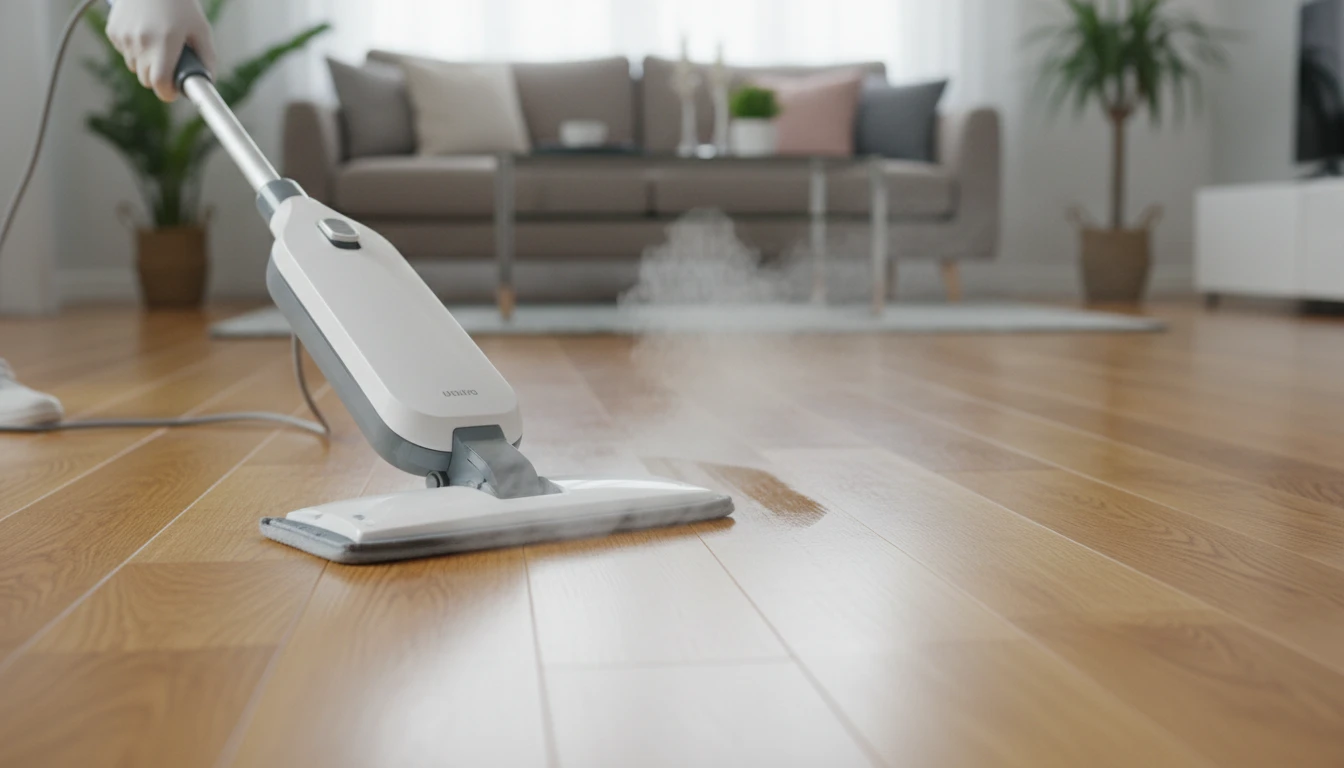
Understanding Hardwood flooring steam cleaning
Hardwood flooring steam cleaning often results in divided opinions among homeowners: some advocate for it, while others have witnessed its damaging effects. The truth is that steam mops utilize superheated water vapor to sanitize surfaces, which might sound gentle, but wood floors are unexpectedly susceptible to damage. Moisture can infiltrate seams, warp planks, and gradually dull protective finishes. According to Consumer Reports, floor manufacturers frequently caution against steam cleaning as it voids warranties and accelerates wear.
However, not all hardwood is identical. Sealed floors with polyurethane finishes can withstand minimal steam exposure if used properly—quick passes, low moisture settings, and immediate drying are essential. For unsealed, waxed, or oil-finished floors, steam cleaning is not advisable. The key is understanding what “controlled vapor” means: skimming the surface with heat rather than saturating it. Most issues occur when the mop is left stationary or the steam is set to maximum, inundating the wood with more moisture than it can handle.
Prior to deciding if steam cleaning is suitable for hardwood floors, users should assess if their floors can tolerate it.
Prerequisites: What You Need Before You Start
Before plugging in a steam mop, it’s crucial to discuss equipment and floor preparation—because steam cleaning wood floors involves more than just switching on a machine.
First, verify the floor’s finish. Run a hand across the surface; if it feels smooth and slightly glossy, it likely has a sealed finish. Unsealed or waxed floors should not be exposed to steam. As noted by the American Cleaning Institute, moisture penetration in unfinished wood causes immediate swelling and long-term structural damage.
The choice of steam mop is also important. Opt for models with adjustable steam settings—the lowest setting is advisable. Some machines emit steam hot enough for sanitizing surfaces, but hardwood requires gentle vapor, not a pressure washer.
Ensure a sufficient supply of clean microfiber pads (at least two per session), and sweep or vacuum thoroughly beforehand. A single grit particle trapped under a hot, moving mop pad can act like sandpaper.
Finally, conduct the splash test: drop water on an inconspicuous spot. If it beads up, the floor is ready. If it absorbs quickly, the finish has failed, and steam will only worsen the deterioration.
How to Safely Steam Clean Hardwood Floors
Five years of trial and error have shown that steam mop compatibility for hardwood floors isn’t straightforward—it’s a spectrum. The floors that endured were engineered hardwood with polyurethane finishes, while waxed oak warped within three cleanings.
The essential rule is this: never let steam sit. Continuous movement at about two feet per second is crucial—fast enough to prevent moisture penetration, slow enough to clean effectively. Consumer Reports testing confirms that prolonged exposure results in the cupping observed in the dining room.
The technique evolved into a three-pass maximum system: one forward pass to loosen dirt, one backward pass to collect it, and the section is complete. Research indicates that steam technology can be effective when applied properly, where “properly” means with restraint. Most damage occurs when steam mops are used like traditional mops, with multiple passes until the floor “looks wet enough.”
The key insight? Cleaning with controlled vapor, not soaking the wood. Keep the mop moving, use the lowest effective steam setting, and immediately wipe away any visible moisture with a microfiber cloth.
Step-by-Step Cleaning Process
The following routine transformed floor-cleaning from a 45-minute ordeal into a quick 25-minute task. First, vacuum thoroughly—steam cleaning doesn’t remove debris; it bakes it onto the floors. This was a lesson learned the hard way when a Cheerio melted into the oak.
Start in the far corner and work backward toward the exit. Keep the mop in constant motion—three seconds maximum per spot. Think of it like ironing: steady motion prevents scorch marks. Overlapping passes in a figure-eight pattern cover more ground faster than the traditional back-and-forth method.
A game-changer? At least two microfiber pads. Using a dirty pad spreads grime around. Switching pads halfway through 800 square feet is crucial, and Good Housekeeping experts confirm that fresh pads prevent residue buildup that causes streaking.
Never let the mop sit still—that’s where water damage occurs. If a pause is needed, lift the mop completely off the floor. The wood should be dry to the touch within 30 seconds. If not, too much steam is being used or movement is too slow.
Case Study: Mastering Steam Cleaning for Hardwood Floors
The biggest breakthrough came in year three, following a close call with dining room oak. Confidence led to leaving the steam mop for hardwood floors stationary for about 10 seconds while answering the phone. The resulting water mark took two weeks to fully evaporate and fade.
This incident prompted a reevaluation. Timing became essential: never more than 5 seconds in one spot, maintaining constant motion, and using the lowest viable steam level. The change? Thinking of it as “creating a comfortable environment”—gentle, controlled, and respectful of the material.
The results were immediate. An 800 square feet area of mixed hardwood remains pristine for two weeks between deep cleans. Zero water damage, zero dullness, zero regrets. The simple truth: less is always more with steam. The mop runs at 60% power maximum, with two quick passes per section, never backtracking over wet areas.
The reality is that most “hardwood floor steam cleaner damage” is not the fault of the machine—it’s operator error, pure and simple.
Lessons Learned: The Importance of Controlled Vapor
Five years of experience taught that safe steam cleaning hardwood involves understanding that the mop’s steam button isn’t an on/off switch—it’s a throttle to barely touch. The turning point came when measuring actual moisture output. On maximum settings, the steam mop released enough water vapor to visibly dampen the wood in under three seconds, a disaster waiting to happen.
The breakthrough was treating steam cleaning like airbrushing—light, consistent passes with controlled bursts. Research shows steam’s effectiveness depends on controlled application, not saturation. Now, using 30% steam output maximum, the mop moves constantly in two-foot sweeps. The floor gets clean from the heat and minimal moisture, not from soaking.
The game-changer: success is judged by what isn’t seen. No water beads forming between boards. No darkened wood patches. No lingering dampness after 60 seconds. When a neighbor inquired about the routine, the “touch test” demonstrated—running a hand across the floor immediately after cleaning. It should feel warm and slightly tacky, never wet. This tactile feedback became a quality control checkpoint, preventing moisture creep that damages floors over time.
Trade-offs and Alternatives
The reality is that a steam mop for hardwood floors occupies a gray area between “brilliant innovation” and “asking for trouble.” The controlled vapor approach works but is finicky. Constantly managing moisture levels, checking temperature settings, and second-guessing every pass is necessary.
For everyday maintenance, shifting to microfiber dust mopping followed by damp (not wet) mopping with diluted hardwood cleaner is more practical. It takes the same 25 minutes, with zero stress about moisture damage. The floors still look great.
Steam cleaning is ideal for quarterly deep cleans when serious sanitization is needed—especially with pets or kids crawling around. Research shows steam technology kills 99.9% of bacteria without chemicals, important for families with toddlers.
But after five years, the honest take is: if unwilling to obsess over technique, skip the steam. A quality hardwood-specific cleaner and proper technique deliver 90% of the results with 10% of the risk. Floors—and peace of mind—will benefit.
Frequently Asked Questions About Steam Cleaning
Can steam mops really damage sealed hardwood floors?
Yes, but the issue is not the steam itself—it’s the usage. Consumer Reports warns that excessive moisture from any source can cause cupping and warping. The reality? Sealed hardwood floors can handle brief, controlled vapor exposure. Problems arise when the mop is parked in one spot or when “sealed” is mistaken for “waterproof.”
How often can one steam clean without causing harm?
Once every two weeks maximum, and only as a supplement—never as the primary cleaning method. Between steam sessions, stick to dry or barely-damp microfiber. Think of steam cleaning like deep conditioning hair: helpful occasionally, damaging if done daily.
What’s the difference between steam cleaning and wet mopping?
Steam uses vaporized moisture at 212°F that evaporates quickly, while traditional mopping leaves liquid water on the surface. However, a steam mop held stationary is worse than a wet mop because it injects moisture into seams and joints, not just coating the surface.
Key Hardwood Flooring Steam Cleaning Takeaways
Steam cleaning hardwood isn’t a straightforward decision—it’s about matching technique to the specific floor type. Sealed hardwood tolerates controlled vapor when moving quickly and using minimal moisture, but unsealed, engineered, or laminate floors face real warping risks. Science supports this: research shows steam effectively sanitizes surfaces when applied correctly, but temperature control matters more than most realize.
Here’s what works: keep the mop moving continuously, use the lowest steam setting, and never let it rest on one spot. If water pools or the floor feels wet afterward, the line into damage territory has been crossed. Most flooring manufacturers void warranties for steam use—not because the technology fails, but because most use too much heat for too long. A well-wrung microfiber mop with pH-neutral cleaner delivers comparable results with zero risk, and setting up your cleaning station properly makes the process faster.
Is it okay to steam clean hardwood floors?
The short answer: it depends on the specific floor. Sealed hardwood can handle steam cleaning when done correctly, but unsealed wood should never be steam cleaned. The key distinction is the protective finish—the American Cleaning Institute confirms that polyurethane-sealed floors tolerate controlled vapor exposure, while exposed wood fibers absorb moisture immediately and swell.
Lessons learned the hard way: Initial attempts at steam cleaning left cloudy streaks due to slow movement. The mistake wasn’t the steam itself—it was operator error. Adjusting the technique to quick, single passes with minimal moisture output resolved these issues.
The real risk comes from excessive heat concentration. When steam remains in one spot too long, it can penetrate even sealed finishes and cause localized damage. Most “steam cleaner disasters” result from stationary use or high steam output, not from the cleaning method itself. Move quickly, use light pressure, and sealed hardwood will be fine.
How much does Stanley Steemer charge to clean hardwood floors?
Stanley Steemer generally charges between $0.30 to $0.50 per square foot for hardwood floor cleaning, though prices vary by location and service level. For an average 1,000-square-foot home, the cost ranges from $300-$500 for a complete professional cleaning.
Pricing depends on several factors: floor condition, finish type, and whether additional services like buffing or deep cleaning are needed. Most locations offer tiered packages—basic cleaning is cheaper, while restoration services addressing scratches or dullness cost more.
Factors affecting the final bill include rooms with heavy furniture requiring more prep time, high-traffic areas needing extra passes, and older floors with worn finishes demanding gentler techniques. Stanley Steemer adjusts rates based on these conditions rather than offering a flat rate. Most franchise locations provide free estimates, which is advisable before committing. They assess the specific floor type and recommend if their hot water extraction method suits the hardwood, particularly important since some cleaning methods can damage certain floor finishes.
The alternative to professional service? Doing it yourself with proper equipment and technique can save money, but assumes all the risk of potential water damage.
What is the best way to clean hardwood floors?
The most effective method combines regular dry cleaning with occasional damp mopping using pH-neutral cleaners. Avoid the steam mop dilemma and stick with what works long-term.
The simple approach for pristine floors: sweep or vacuum daily to remove grit (the real enemy of hardwood), then damp mop weekly with a barely-wet microfiber mop and wood-specific cleaner. The key is “damp”—the mop should be wrung out so thoroughly it’s almost dry.
For stubborn spots, dedicated hardwood floor cleaners outperform steam in controlled studies, removing dirt without moisture risks. Mix a capful of cleaner in warm water, apply sparingly, and wipe immediately in the wood grain direction.
The method that has endured through generations remains the best: less moisture, more frequency. Professional cleaners agree that preventing dirt buildup is more effective than aggressive deep-cleaning. Felt pads under furniture legs and door mats at entrances protect floors more than any cleaning tool.
This traditional approach naturally leads to the question of when DIY methods aren’t enough—and whether professional cleaning makes financial sense.
Should you have your hardwood floors professionally cleaned?
Professional cleaning is beneficial for high-traffic homes or when dealing with deep-set grime that regular maintenance can’t address. Most homeowners don’t need professionals quarterly—exceptions being commercial spaces or homes with kids and pets grinding in dirt daily.
The practical breakdown: if a DIY routine maintains good-looking floors, skip the pro visits. But when sticky residue buildup, dullness that buffing won’t fix, or preparation for a major event occurs, professional services with industrial equipment and expertise are worth the investment.
The timing sweet spot? Annual deep cleaning for most households, semi-annual for busy families. Professionals use pH-balanced commercial cleaners and rotary equipment that extracts grime without moisture risks associated with steam. According to research on steam technology cleaning, professional-grade equipment offers better soil removal than consumer alternatives.
One caveat: verify they’re not using steam methods on hardwood. Many services have shifted away from steam due to warping risks, but always confirm their approach. The right pro cleans safely without shortcuts—and that’s worth paying for when needed. For engineered floors, professional verification of flooring type prevents costly mistakes.
Is steam mop safe for engineered wood flooring?
Engineered wood is more susceptible to steam damage than solid hardwood. The counterintuitive truth is that thin veneer layers delaminate faster when exposed to moisture and heat. Glue bonds holding layers together break down at around 212°F—the temperature steam produces.
After five years of maintaining engineered floors, this lesson was learned the hard way. Steam penetrates through microscopic gaps in the finish, attacking adhesive layers beneath. Barely visible edge swelling can lead to full plank separation within months.
Manufacturer warnings exist for good reason. Most engineered flooring warranties explicitly void coverage if steam cleaning is detected. Consumer Reports found that repeated steam exposure causes “irreparable damage” to the layered construction that engineered products rely on.
Stick with the damp microfiber approach. Engineered floors maintain their structural integrity longer with proper pH-neutral cleaners and minimal moisture—the method that preserves both appearance and warranty coverage.
How to keep real wood floors clean without steam mop or …
The simple approach outperforms fancy gadgets. A microfiber mop dampened with warm water handles 95% of daily cleaning needs—no special equipment required.
Here’s the effective method: sweep or vacuum first to remove grit, then mop with a barely-damp microfiber pad using a simple solution of water and a drop of dish soap. The key is wringing out the mop until it’s almost dry. Walking on the floor immediately after mopping without wet footprints should be possible.
For weekly deep cleaning, mix ¼ cup white vinegar per gallon of water. This cuts through buildup without leaving residue that dulls the finish over time. However, skip vinegar if floors are waxed—it strips wax quickly.
The American Cleaning Institute recommends this damp-mop approach for precise moisture control that steam systems can’t match.
Switching from steam to traditional mopping typically results in faster-drying floors and eliminates moisture seeping into seams. More time is saved—no heat-up period, no refilling water tanks, just straightforward maintenance.
Is it safe to steam clean hardwood floors?
The short answer: it depends on the floor’s finish and technique. Years of navigating this question with 800 square feet of hardwood revealed that “safe” isn’t binary—it’s about understanding specific floor types and applying controlled technique.
Sealed hardwood with polyurethane or similar protective coatings can withstand light steam cleaning when done correctly. The critical factor is limiting moisture exposure to under 15 seconds per spot. This was learned the hard way after leaving a steam mop stationary for 30 seconds in one area, creating a dull patch that took weeks to recover.
However, Consumer Reports strongly recommends against steam mopping wood floors, citing moisture penetration risks even with sealed surfaces. The American Cleaning Institute echoes this caution, noting manufacturers’ specific warnings against steam on hardwood.
What determines actual safety? The floor’s finish quality and age. New polyurethane finishes offer better moisture resistance than older, worn coatings. If gaps between boards or areas where the finish looks dull are visible, steam cleaning becomes risky. Water vapor finds vulnerabilities quickly.
The safest approach? Reserve steam cleaning for tile or sealed stone, and stick with damp microfiber mopping for hardwood investment.
Can you clean hardwood and laminated floors with water …
Water behaves differently on these two floor types, and understanding that difference protects the investment. Hardwood floors tolerate minimal moisture—a damp (not wet) microfiber mop with plain water or diluted vinegar handles everyday cleaning.