Phase 1 Environmental Site Assessment Cost: Complete Pricing Guide for 2026
Table of Contents
Introduction: Understanding a Phase 1 Environmental Site Assessment
Before you close on that commercial property or industrial site, there’s a critical step that could save you from inheriting someone else’s environmental nightmare—and it’s called a Phase 1 Environmental Site Assessment. A Phase 1 ESA is a comprehensive evaluation that investigates whether a property has been contaminated by hazardous materials or pollutants, typically conducted before real estate transactions to protect buyers from unexpected cleanup costs that can easily reach six or seven figures.
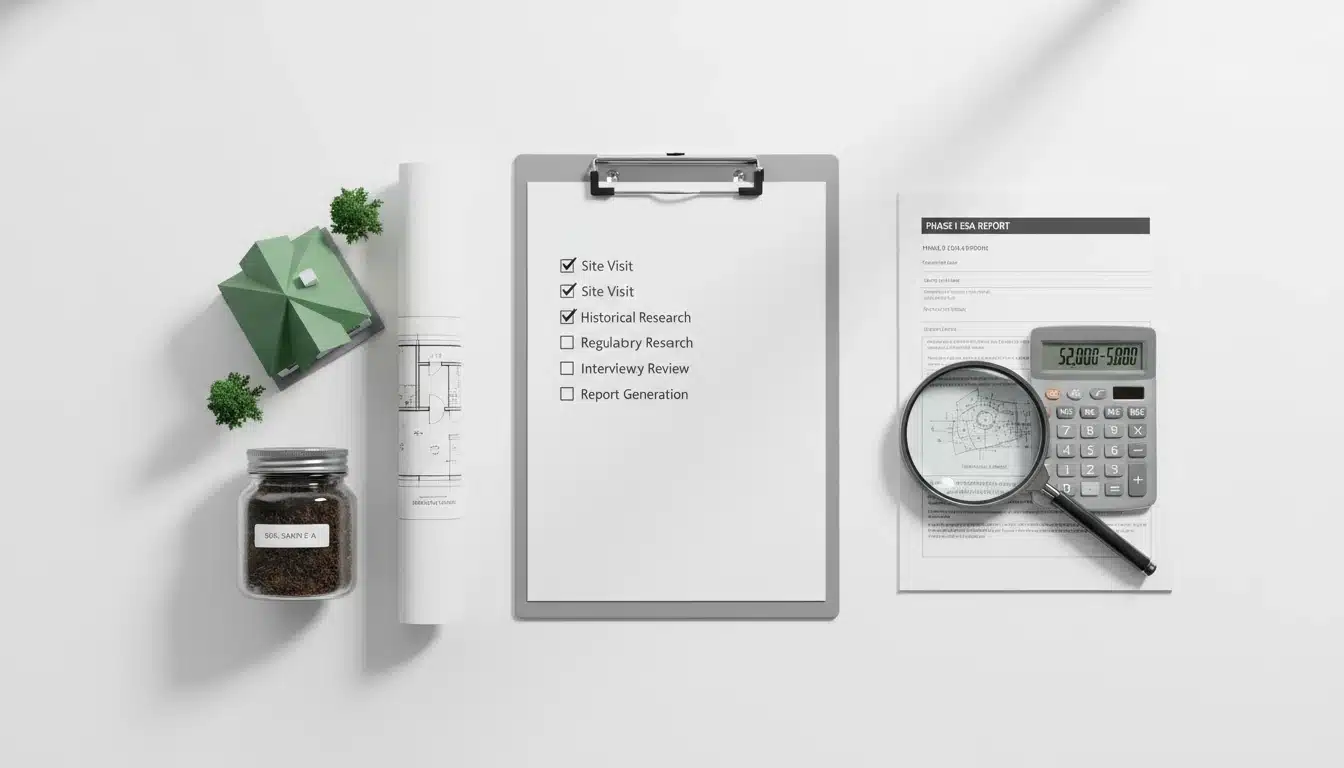
The assessment follows a systematic approach with three primary components:
- Historical review of the property, examining old maps, aerial photographs, and public records to identify previous uses that might have introduced contaminants—think former gas stations, dry cleaners, or manufacturing facilities.
- Site inspection, walking the property to spot warning signs like stained soil, unusual odors, or aging underground storage tanks.
- Environmental database review, cross-referencing the property against federal and state contamination registries.
Understanding the phase 1 environmental site assessment cost becomes crucial during due diligence, as prices can vary significantly. How much is a Phase 1 inspection? While we’ll explore specific numbers in detail, it’s worth noting that the phase 1 environmental site assessment cost California properties face often differs from other regions due to stricter state regulations and higher consultant fees.
The importance of conducting environmental site assessments cannot be overstated—they’re your insurance policy against inheriting costly environmental liabilities. A thorough Phase 1 ESA identifies recognized environmental conditions (RECs) that could trigger mandatory cleanup obligations, giving you the power to renegotiate the purchase price, require seller remediation, or walk away from a potentially disastrous investment.
For more property investment insights, explore our Home Improvement category.
Factors Influencing Phase 1 ESA Costs
Not all Phase 1 Environmental Site Assessments are created equal—and neither are their price tags. Understanding what drives the Phase 1 ESA price helps you budget appropriately and avoid sticker shock when quotes arrive.
Property Size and Location
Property size stands as perhaps the most obvious cost driver. A small retail lot requires far less investigation time than a sprawling industrial campus. Larger properties mean more ground to cover, more historical records to review, and more interviews to conduct.
Similarly, location matters significantly. Urban properties in densely developed areas often require more extensive research into neighboring sites and historical land use, while rural properties might involve additional travel costs for the environmental consultant. If you’re searching for a “Phase 1 Environmental Site Assessment near me,” expect local market rates to vary—metropolitan areas typically charge more than smaller markets.
Site History Complexity
The complexity of the site’s history dramatically impacts the assessment scope. A property with straightforward commercial use (like a former office building) presents a simpler task than one with industrial heritage. Manufacturing facilities, gas stations, dry cleaners, or auto repair shops require deeper investigation into potential contamination sources, which extends the timeline for how long for Phase 1 environmental assessment completion and increases costs accordingly.
Consultant Expertise
Consultant expertise and credentials also factor into pricing. According to industry operating cost data, qualified environmental professionals with specialized certifications command higher fees—but they also deliver more thorough assessments that better protect your interests in the cost breakdown in real estate development equation. Sometimes paying more upfront actually saves money by identifying issues before they become expensive surprises.
Typical Cost Ranges and What to Expect
When budgeting for property due diligence, expect to invest between $2,000 and $5,000 for a standard Phase 1 Environmental Site Assessment. This environmental assessment cost covers the baseline research, site visit, and reporting required to satisfy most lenders and transaction requirements. However, that range isn’t one-size-fits-all—your actual invoice depends heavily on what you’re assessing.
Cost by Property Type
| Property Type | Typical Cost Range |
|---|---|
| Small Residential | $1,500 – $2,500 |
| Standard Residential | $2,000 – $3,000 |
| Commercial Retail | $2,500 – $4,000 |
| Industrial Facility | $4,000 – $8,000 |
| Vacant Land | $2,000 – $3,500 |
Commercial properties typically fall on the higher end of this spectrum. A multi-acre industrial site with decades of operational history might push toward $4,000-$5,000, while a straightforward retail space could land closer to $2,500. Residential properties generally cost less—often $1,500-$3,000—since they involve simpler site histories and smaller footprints.
Regional Variations
Regional variations affect pricing too. A Phase 1 environmental study cost Florida might differ from one in Montana due to varying regulatory landscapes, property values, and consultant availability. States with more complex environmental histories or stricter disclosure requirements often see higher assessment fees.
What Could Push Costs Higher
Here’s what could push your costs higher: If your consultant discovers evidence of underground storage tanks, contaminated soil indicators, or questionable waste disposal practices, you’ll likely need a Phase 2 ESA—think soil sampling and groundwater testing—which starts around $5,000 and climbs quickly. Similarly, if your assessment reveals structural concerns requiring specialized expertise, you might also need a structural engineer foundation cost evaluation, adding another layer to your due diligence budget.
Comparison: Phase 1 vs Phase 2 Environmental Site Assessment Costs
While a Phase 1 ESA investigates historical property use through records review, a Phase 2 Environmental Site Assessment takes the next step: actual physical sampling and laboratory analysis of soil, groundwater, or building materials. This fundamental difference dramatically affects site assessment pricing—Phase 2 assessments typically cost anywhere from $5,000 to $25,000 or more, depending on the contamination suspected and the number of samples required.
When Phase 2 Becomes Necessary
You’ll only need a Phase 2 assessment when the Phase 1 report identifies a “Recognized Environmental Condition” (REC)—essentially, a red flag suggesting contamination might exist. Common triggers include evidence of underground storage tanks, historical industrial operations, or documented spills. According to What Are Phase I Environmental Site Assessment Operating Costs?, this escalation occurs in about 15-20% of commercial property transactions. Before you panic about Phase 1 billing to customer expanding unexpectedly, remember that most lenders explicitly require Phase 2 follow-up before approving financing on properties with identified RECs.
Phase 2 Environmental Site Assessment Steps
The Phase 2 process involves soil borings, groundwater monitoring well installation, and comprehensive laboratory testing—all of which require specialized equipment and certified technicians. Each soil sample can cost $100-$400 to analyze, and properties often need multiple sampling points to accurately characterize contamination extent.
Cost Breakdown: Phase 1 vs Phase 2
| Cost Element | Phase 1 ESA | Phase 2 ESA |
|---|---|---|
| Typical Range | $2,000–$5,000 | $5,000–$25,000+ |
| Primary Activities | Records review, site walkthrough | Drilling, sampling, lab analysis |
| Timeline | 1–2 weeks | 2–8 weeks |
| Physical Testing | None | Extensive |
| Deliverables | Written report | Lab results + interpretation report |
This cost comparison reveals why thorough Phase 1 work matters—catching issues early helps you anticipate whether significant Phase 2 expenses lie ahead.
How to Budget for a Phase 1 ESA Effectively
Smart budgeting starts with requesting quotes from at least three qualified consultants to establish realistic price expectations. However, don’t automatically choose the lowest bid—a significantly cheaper quote might indicate shortcuts in the procedure for environmental site assessment that could compromise accuracy.
What to Ask Consultants
When evaluating proposals, ask consultants to break down their costs by component:
- Records review
- Site inspection time
- Travel expenses
- Report preparation
This transparency helps you understand where your money goes and identifies potential areas for negotiation. For instance, combining multiple property assessments with a single consultant often yields volume discounts of 10-15%.
Timing Considerations
Timing plays a crucial role in cost management. Rush jobs typically carry 20-30% premium charges, so plan your assessment well before critical transaction deadlines. Similarly, properties with complex histories or located in areas with limited historical records will naturally command higher fees—factor this into your timeline and budget from the start.
Value Over Price
Consider whether your consultant has completed Environmental Site Assessment training specific to your property type. Specialists familiar with your industry (industrial facilities, gas stations, dry cleaners) often work more efficiently, potentially offsetting their higher hourly rates through faster completion.
When negotiating, focus on value rather than just price. Ask about Phase 2 ESA cost estimates upfront if contamination seems likely—some consultants offer bundled pricing that reduces overall expenses. You might also negotiate flexible payment terms tied to transaction milestones, spreading costs across your closing timeline while maintaining quality standards.
For more home investment guidance, check out our Home Improvement category.
Limitations and Considerations
Understanding What a Phase 1 ESA Can’t Do
A Phase 1 ESA isn’t a perfect crystal ball for environmental problems. The assessment relies heavily on available historical records and visual inspections, which means contamination hidden beneath the surface or undocumented in public records might slip through undetected. Environmental consultants can only work with what they can see and what’s been recorded—they’re not sampling soil or groundwater at this stage.
This limitation matters because certain risks may remain invisible until more invasive testing occurs during Phase 2 or even Phase 3 investigations. A Phase 3 environmental site assessment cost can become necessary when remediation plans need detailed design, potentially adding tens of thousands to your total environmental due diligence expenses.
The Risk of Skipping Environmental Inspection
Property buyers who bypass environmental assessments face substantial financial and legal exposure. Without the liability protection afforded by proper due diligence, you could inherit cleanup costs that dwarf the property’s purchase price. The risk of skipping environmental inspection includes potential lawsuits, regulatory penalties, and difficulty securing financing or insurance.
However, not every transaction demands a full Phase 1 ESA. For pristine residential properties in established neighborhoods with no concerning history, a simplified environmental questionnaire combined with a targeted life cycle assessment charge might suffice—though this approach requires careful evaluation with your attorney and lender.
Example Scenarios for Different Property Types
Understanding how property characteristics affect assessment costs becomes clearer through real-world scenarios. A Phase 1 Environmental Site Assessment checklist typically varies based on what consultants need to investigate, and different property types demand different approaches.
Retail Shopping Center Purchase
A typical retail property scenario involves a 50,000-square-foot shopping center built in 1985. The assessment includes reviewing tenant histories (including former dry cleaners and auto service shops), examining underground storage tank records, and checking municipal files. This property might cost $2,500-$4,000 for the Phase 1 ESA, depending on how many former tenants require historical research.
Industrial Manufacturing Facility
Industrial properties present greater complexity. Consider a 100,000-square-foot manufacturing facility with multiple previous owners. Consultants must trace chemical usage patterns, investigate historical spills, and review regulatory compliance records spanning decades. These assessments typically run $4,500-$8,000 because they require extensive research and specialized knowledge of industrial processes.
Vacant Land Development
Vacant land scenarios often surprise buyers with unexpected costs. A 10-acre parcel being prepared for residential development requires geological review, wetland assessment, and historical land use research. If the project involves significant earthwork—similar considerations apply whether planning a residential layout or determining the cost to build artificial hill features for landscaping—environmental factors become crucial. These assessments typically range $2,000-$3,500, though topographic complexity increases scope.
Many buyers search for a Phase 1 environmental site assessment cost calculator, but the variables affecting pricing make standardized calculators unreliable. Instead, detailed property information yields more accurate consultant quotes.
Key Phase 1 Environmental Site Assessment Cost Takeaways
Understanding phase 1 environmental site assessment cost starts with recognizing the primary drivers: property size, location complexity, historical land use, and site accessibility. For properties in regions like Texas, where industrial history varies widely by county, Phase 1 environmental site assessment cost Texas figures typically range from $1,500 to $4,000, reflecting local market conditions and property characteristics.
What Your Investment Covers
What does a Phase 1 environmental assessment include fundamentally shapes your investment. The assessment delivers:
- Records review
- Site reconnaissance
- Regulatory database checks
- Comprehensive report with findings
All designed to identify recognized environmental conditions before you commit to a purchase. This due diligence protects you from inheriting unexpected contamination liabilities that could dwarf the initial environmental testing cost.
Budgeting Wisely
Budgeting effectively means considering both the upfront assessment expense and potential follow-up Phase 2 investigations if concerns surface. According to industry operating cost analysis, incorporating these assessments into your transaction timeline prevents rushed decisions and incomplete evaluations.
The Bottom Line
The bottom line? A Phase 1 ESA represents essential insurance against environmental risks in commercial real estate. Spending $2,000–$5,000 today can prevent six-figure remediation costs tomorrow—making it one of the smartest investments in any property transaction.
For more property and home investment insights, explore our Home Improvement category.
Frequently Asked Questions
What is the typical cost range for a Phase 1 Environmental Site Assessment?
The typical cost for a Phase 1 Environmental Site Assessment ranges from $2,000 to $5,000, depending on property size, location, and complexity of the site’s history.
How does property location affect the Phase 1 ESA price?
Location significantly impacts Phase 1 ESA pricing; urban areas often have higher fees due to more extensive research requirements and higher local market rates for consultants.
What factors can increase the cost of a Phase 1 Environmental Site Assessment?
Costs can increase due to larger property size, complex historical land use (industrial sites, gas stations), discovery of potential contamination, rush timelines, or the need for specialized consultant expertise.
How long does a Phase 1 Environmental Site Assessment take to complete?
The duration typically ranges from 1-2 weeks, though complex sites with extensive historical records may require additional time. Rush services are available at premium rates (20-30% higher).
What does a Phase 1 Environmental Site Assessment include?
A Phase 1 ESA includes a historical records review, on-site inspection, environmental database search, and comprehensive report identifying recognized environmental conditions (RECs) on the property.
When do I need a Phase 2 Environmental Site Assessment?
You need a Phase 2 assessment when the Phase 1 report identifies a Recognized Environmental Condition (REC) requiring physical sampling of soil, groundwater, or building materials to confirm contamination.