Transform Your Space with Innovative Smart Mirrors
Introduction to Smart Mirrors
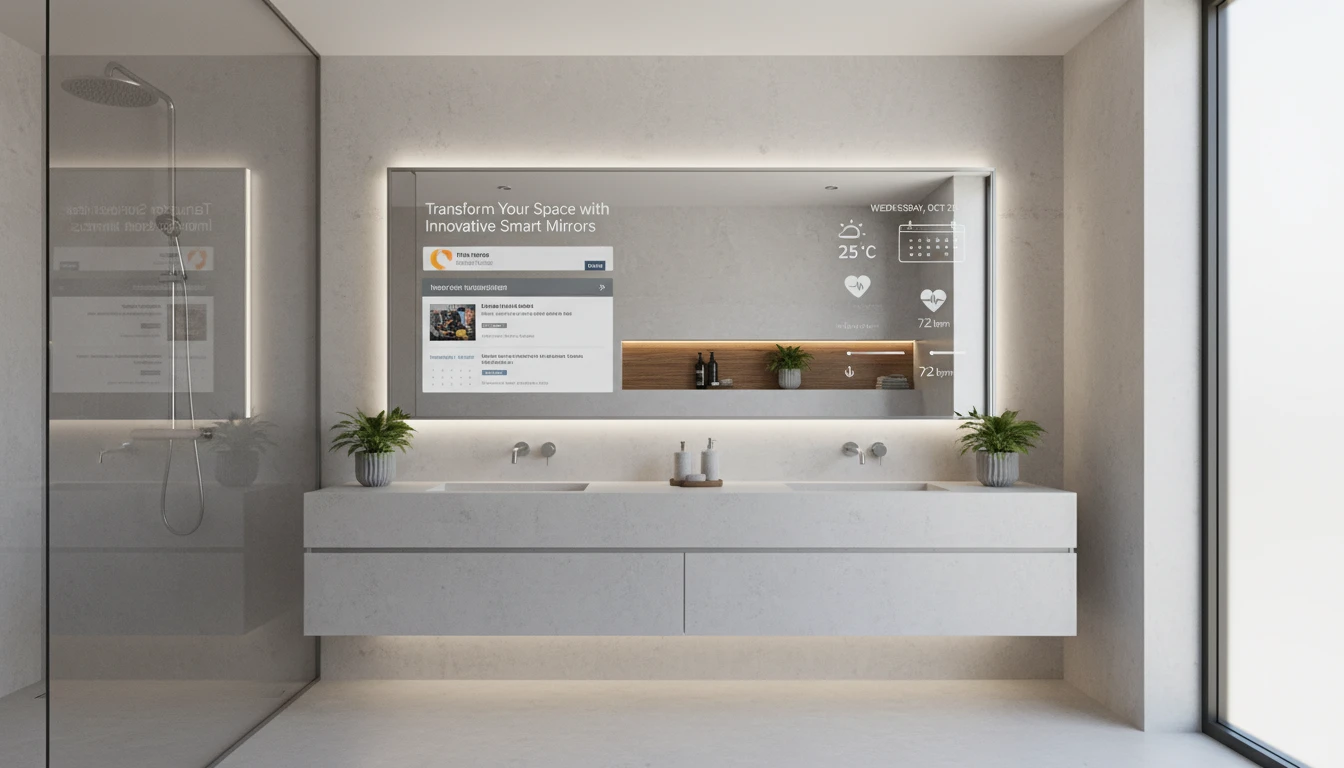
Imagine checking your calendar, catching up on news headlines, and monitoring your fitness metrics—all while brushing your teeth. That’s the promise of a smart mirror, and it’s transforming ordinary reflective surfaces into interactive command centers. These devices seamlessly blend traditional mirrors with embedded displays, sensors, and connectivity features that bring digital information directly into your daily routines.
The technology has evolved rapidly from early DIY experiments to sophisticated commercial products. What started as novelty gadgets for tech enthusiasts has matured into a booming market segment. According to Markets and Markets, the global smart mirror market is projected to reach a value of $16.42 billion by 2025 in the coming years, driven by increasing smart home adoption and consumer demand for integrated experiences. The smart mirror market now spans applications from residential bathrooms to retail fitting rooms and automotive displays.
The appeal is straightforward: smart mirrors consolidate information access without adding screen time to your already device-heavy life. They deliver weather updates during your morning routine, provide workout guidance in home gyms, and offer skincare analysis in bathrooms. For homeowners upgrading their living spaces, these mirrors represent a natural extension of smart home ecosystems, complementing voice assistants, smart lighting, and connected appliances while maintaining the functional simplicity of a traditional mirror.
Smart Mirror Options Overview
The interactive mirror market has expanded dramatically, offering consumers a diverse array of choices across price points and feature sets. According to Precedence Research, the global smart mirror market is projected to reach $16.45 billion by 2034, reflecting the growing variety of options available.
Smart mirrors typically fall into three main categories: pre-built commercial units, DIY kits, and fully custom installations. Pre-built options from brands like Capstone, HiMirror dominate the retail segment, offering plug-and-play convenience with features like skin analysis, and fitness tracking. These units typically range from $200 to $2,000 depending on functionality.DIY enthusiasts can explore modular solutions that combine a two-way mirror, display panel, and single-board computer like Raspberry Pi. These customizable builds allow for personalized interfaces but require technical expertise. Meanwhile, high-end custom installations—often integrated into luxury bathrooms or fitness studios—can exceed $10,000, incorporating advanced features like body composition analysis and smart home integration.
The key differentiator across brands lies in display technology (LCD vs. LED), touch sensitivity, and software ecosystems. Some mirrors prioritize beauty and wellness features, while others focus on information displays or entertainment capabilities.
Functionality and Features
Modern smart mirrors—often called magic mirror displays—pack an impressive array of capabilities that transform your daily routine. At the baseline level, most models deliver weather forecasts, news headlines, and calendar integration right on your bathroom or bedroom mirror. According to Fortune Business Insights, these core features have become standard expectations across the market.
Advanced functionalities push boundaries further. Voice control through Alexa or Google Assistant lets you manage your mirror hands-free while getting ready. Smart home integration enables you to adjust lighting, check security cameras, or control your thermostat—all from a single reflective interface. Some premium models even incorporate fitness tracking, displaying your workout stats and health metrics in real-time.
Customization options vary dramatically by manufacturer. You might configure widget placement, choose which apps appear, or set personalized routines for different times of day. Some systems allow multiple user profiles, automatically adjusting displayed information based on facial recognition. Typically, users start with basic features, then gradually expand functionality as they discover their mirror’s full potential. However, more features often mean steeper learning curves and higher price tags—a tradeoff worth considering before committing to a specific model.
Build Quality and Durability
The construction quality of a personalized mirror significantly determines its lifespan and daily performance. Premium models typically feature commercial-grade two-way mirrors with moisture-resistant coatings, while budget options may use standard glass that fogs easily in bathroom environments. According to Persistence Market Research, high-end smart mirrors incorporate tempered glass and corrosion-resistant frames designed to withstand humidity exposure for over five years.
User reviews consistently highlight durability concerns with lower-priced units. Common issues include screen delamination from moisture infiltration, touch sensor degradation after 12-18 months, and LED backlight failure. However, commercial-grade models built with IP65-rated components demonstrate exceptional longevity. One practical approach is examining the warranty period—reputable manufacturers offering three to five-year coverage typically use superior materials.The electronics housing matters tremendously. Aluminum or stainless steel enclosures protect sensitive components better than plastic alternatives, particularly in high-humidity spaces. Typically, that cheaply constructed mirrors develop edge discoloration within months, while properly sealed units maintain clarity for years.
Usability and User Interface
The control interface separates exceptional smart mirrors from merely functional ones. Most modern displays employ touch-sensitive surfaces overlaid on the glass, though some budget models still rely on physical buttons or voice commands exclusively. The best implementations respond within 200 milliseconds—fast enough to feel instantaneous—while struggling interfaces lag noticeably, creating frustration during morning routines.
A well-designed smart mirror applicationlicationlicationlication serves as the control hub, allowing users to customize layouts, add widgets, and manage connected services from their smartphones. However, according to Smart Mirror Market analysis, the market faces challenges with fragmented ecosystems where different manufacturers use incompatible software platforms. This lack of standardization creates a steep learning curve for new users.
Accessibility remains an evolving concern. While voice control benefits users with mobility limitations, visual interfaces often lack adjustable text sizes or high-contrast modes for those with impaired vision. The industry could significantly improve by implementing universal design principles—larger touch targets, simplified navigation trees, and customizable brightness ranges that accommodate varying eyesight capabilities across age groups.
Cost and Value for Money
Smart mirrors present a significant upfront investment, with prices ranging from $200 for basic models to over $3,000 for premium installations. Entry-level units typically offer weather updates, basic notifications, voice assistants, and customizable lighting systems. According to IndustryARC, the average consumer-grade smart mirror costs between $500-$1,500, positioning these devices as premium home technology investments.Value assessment depends heavily on intended usage patterns. A mirror with fitness integration and health tracking justifies higher costs for wellness enthusiasts, potentially offsetting gym membership fees. However, durability concerns persist—warranty coverage varies dramatically, with budget models offering 12 months versus 3-5 years for commercial-grade alternatives.
Financing options have expanded alongside market growth. Many manufacturers now offer monthly payment plans starting around $30-$50, making premium features more accessible. Long-term value emerges through energy-efficient LED systems and reduced need for multiple devices—consolidating tablets, cameras, and displays into one interface. The key consideration: will daily use match the financial commitment?
Case Study: A Day with a Smart Mirror
Sarah’s morning begins at 6:30 AM when her smart mirror bedroom display gently illuminates, showing her calendar appointments and current weather conditions. As she approaches, facial recognition activates her personalized dashboard—today’s meetings appear alongside traffic updates for her commute, while her fitness tracker data syncs automatically to display yesterday’s step count and water intake goals.
The mirror’s AI assistant reads her top three priorities while she prepares for the day, eliminating the need to check her phone constantly. Weather-appropriate outfit suggestions appear based on the forecast and her calendar entries, helping her dress appropriately for both an outdoor client meeting and evening yoga class. The integration transforms what was once a fragmented routine of checking multiple apps into a single, streamlined interaction.
During evening skincare routines, the mirror’s analysis features track changes over time, providing consistent lighting for documenting progress. Typically, users report reclaiming 15-20 minutes each morning by consolidating information access points—no more juggling devices while getting ready.
User feedback reveals that smart mirrors particularly excel at daily planning and habit reinforcement. The constant visual reminders about hydration goals, medication schedules, and upcoming tasks create accountability without requiring active engagement. One practical approach is setting the mirror to display upcoming appointments two hours in advance, giving ample preparation time for unexpected schedule changes.
Limitations and Considerations
While smart mirrors offer compelling functionality, they come with notable limitations that buyers should carefully evaluate. Privacy concerns top the list—many models feature cameras, microphones that constantly process data, and raising questions about who can access this information. A smart mirror bathroom installation presents particular privacy vulnerabilities, as these devices often operate in the most intimate spaces of your home.Data security remains an ongoing challenge. Smart mirrors connect to WiFi networks and cloud services, creating potential entry points for cyber threats. According to SNS Insider’s market analysis, manufacturers are increasingly implementing encryption protocols, yet the reality is that any connected device introduces security risks that traditional mirrors simply don’t have.
Technical maintenance requirements shouldn’t be overlooked either. Software updates need regular installation, screen cleaning requires specific non-abrasive methods to avoid damaging touch sensors, and hardware components like LED backlighting eventually degrade. Typically, that users underestimate the ongoing attention these devices require—unlike conventional mirrors that last decades with minimal care.
Compatibility issues frequently frustrate early adopters. Many smart mirrors work seamlessly within their own ecosystems but struggle to integrate with competing platforms, potentially forcing you to choose between your existing smart home setup and your new mirror’s functionality.
Comparison Table: Smart Mirror Features
Selecting the right smart mirror requires evaluating several technical specifications that directly impact functionality and user experience. The following comparison highlights key differentiators among popular smart mirror categories, helping you assess which features align with your needs.
| Feature Category | Entry-Level | Mid-Range | Premium |
|---|---|---|---|
| Display Size | 15-21 inches | 24-32 inches | 40+ inches |
| Resolution | 720p-1080p HD | 1080p Full HD | 4K UHD |
| Two-Way Mirror Technology | Standard reflective coating | Enhanced anti-glare coating | Premium low-iron glass with superior clarity |
| Connectivity | Wi-Fi only | Wi-Fi + Bluetooth 4.2 | Wi-Fi 6 + Bluetooth 5.0 + Zigbee |
| Touch Capability | No touch (voice/app only) | Basic touch interface | Multi-touch with gesture control |
| Smart Home Integration | Limited (1-2 platforms) | Moderate (2-3 platforms) | Extensive (Alexa, Google, HomeKit, IFTTT) |
| Voice Assistant | Single assistant | Dual assistant support | Multi-assistant with wake word customization |
| Camera/Sensors | None | Optional HD camera | 4K camera + proximity sensors |
Price Range: Entry-level models typically start around $200-$400, mid-range options span $500-$1,200, while premium systems exceed $1,500—reflecting the projected market growth driven by advancing display technologies and consumer demand for integrated smart home solutions.
Recommendations Based on User Needs
Choosing the right smart mirror depends heavily on your specific lifestyle and priorities. Fitness enthusiasts benefit most from models with integrated health tracking and workout capabilities, typically priced between $800-$1,500. These mirrors excel at form correction, progress tracking, and interactive training sessions that justify the premium investment.
For budget-conscious buyers, entry-level bathroom mirrors with basic weather, calendar, and news displays start around $200-$400. These models provide core smart functionality without advanced features like voice control or app ecosystems. According to Smart Mirror Market analysis, the bathroom segment represents significant growth as consumers prioritize practical morning routines over elaborate features.
Smart home integrators should prioritize models with robust compatibility—look for devices supporting Alexa, Google Assistant, or HomeKit. This ensures seamless coordination with existing ecosystems and reduces friction in daily use. Smart mirror sentiment analysis reveals that compatibility issues rank among top frustration points, making this consideration critical for long-term satisfaction.
When selecting your model, consider installation requirements carefully. Wall-mounted units need professional setup and electrical work, while tabletop versions offer plug-and-play convenience. Match the mirror’s capabilities to your actual needs—over-investing in features you won’t use leads to disappointment and wasted budget.
Key Takeaways
Smart mirrors deliver substantial convenience through touchscreen interfaces and voice control mirror capabilities that streamline daily routines. These devices excel at consolidating information—weather forecasts, calendar events, and news briefings—into a single, accessible location during morning preparation. However, the technology requires upfront investment ranging from $200 to over $1,000, plus potential subscription fees for premium features.
Choosing the right model hinges on understanding your specific needs. Consider whether you prioritize fitness tracking, entertainment features, or simple information display. Installation requirements vary significantly: some models need professional mounting and electrical work, while others offer plug-and-play simplicity.
The smart mirror market continues expanding, with manufacturers introducing more affordable options alongside premium models. Before purchasing, evaluate your bathroom or bedroom space, existing smart home ecosystem compatibility, and long-term maintenance considerations. Personal priorities matter most—a morning routine dominated by quick checks benefits from basic displays, while fitness enthusiasts justify advanced health-monitoring features. Take time to match features with your actual daily patterns rather than aspirational ones.
What does a smart mirror do?
A smart mirror functions as an interactive display hub that combines reflective glass with embedded technology to deliver real-time information while you prepare for your day. These devices typically show weather forecasts, calendar appointments, news headlines, and fitness metrics directly on the mirror surface. The touchscreen interface allows users to control connected devices, stream music, or access personalized content without reaching for a separate device.
Integration capabilities extend throughout your smart home ecosystem, connecting seamlessly with voice assistants, lighting systems, thermostats, and security cameras. According to Grand View Research, the smart mirror market’s expansion is largely driven by this interconnectivity with IoT devices, enabling centralized control from one convenient location. You can adjust room temperature, check who’s at your front door, or dim lights using voice commands while brushing your teeth.
The efficiency gains become evident in streamlined morning routines—checking traffic conditions, reviewing your schedule, and monitoring health metrics happen simultaneously during grooming tasks. This consolidation of information sources eliminates device-hopping and reduces preparation time. However, as adoption grows and these devices become more sophisticated, questions naturally arise about potential drawbacks worth considering.
What are the disadvantages of smart mirrors?
Smart mirrors present several notable drawbacks that potential buyers should consider carefully before making a purchase decision. High upfront costs represent the most significant barrier, with quality units typically ranging from $500 to over $2,000 depending on features and screen size. This investment doesn’t always include installation expenses or ongoing maintenance costs.
Technical complexity creates another layer of challenges. Integration issues with existing smart home systems can frustrate users, particularly when devices from different manufacturers don’t communicate seamlessly. Software glitches, frozen displays, and compatibility problems with operating system updates require technical troubleshooting that some homeowners find overwhelming.
Privacy concerns loom large with these connected devices. Smart mirrors with cameras and microphones raise questions about data collection and potential surveillance. Unless properly secured, these devices could become entry points for hackers seeking access to personal information or visual recordings of private spaces like bathrooms and bedrooms.
Customization limitations further restrict their appeal. Many manufacturers lock users into proprietary app ecosystems, limiting widget choices and display options. However, these challenges haven’t deterred the market’s impressive growth trajectory, setting the stage for questions about their fundamental connectivity requirements.
Do magic mirrors require an internet connection?
Most smart mirrors depend heavily on internet connectivity to deliver their full range of features and real-time information. Weather updates, news feeds, calendar synchronization, traffic conditions, and streaming services all require active internet access to function properly. Without connectivity, these mirrors essentially revert to expensive reflective surfaces with limited utility.
However, basic offline capabilities do exist. The mirror itself continues to function as a traditional mirror, and some models retain certain features like displaying the time, stored photos, and or pre-downloaded content. Cached information from previous sessions might remain visible temporarily, but anything requiring fresh data becomes unavailable once the connection drops.For homes with limited or unreliable internet access, several workarounds exist. Mobile hotspot connectivity through smartphones provides a temporary solution, though this consumes cellular data quickly. Some users install dedicated backup internet connections or position mirrors near strong Wi-Fi signals using range extenders. A practical approach involves selecting mirrors with robust offline modes that cache more content and maintain core functionality without constant connectivity.
The connectivity requirement reflects a broader trend in smart home technology where devices increasingly depend on cloud services for processing and data delivery. Before purchasing, consider your home’s internet reliability and whether the mirror’s offline limitations align with your expectations.
How to built a smart mirror
Building a smart mirror is a rewarding DIY project that combines hardware assembly with software configuration. The essential materials include a two-way mirror (also called one-way mirror glass), a flat-screen monitor or display panel, a Raspberry Pi microcomputer, a wooden or metal frame, connecting cables. You’ll also need basic tools like, a screwdriver, measuring tape, and mounting hardware. The step-by-step process begins with measuring and cutting your frame to fit both the monitor and mirror dimensions. Remove the monitor’s casing to reduce depth, then position the display behind the two-way mirror glass. Install the Raspberry Pi and connect it to the monitor via HDMI. Download open-source smart mirror software like MagicMirror², configure your preferred widgets for weather, calendar, and news feeds.Common challenges include achieving proper mirror reflectivity (typically requires 30-40% light transmission) and managing glare from the display. If your reflection appears dim, consider increasing monitor brightness or choosing a higher-quality two-way mirror. Cable management inside the frame prevents unsightly wires from showing through the glass edges.
This hands-on approach offers complete customization control, setting the stage for exploring even more advanced mirror technologies that push beyond traditional reflective surfaces.
Is there a type of mirror that can turn transparent? I want to…
Switchable smart mirrors represent one of the most fascinating innovations in display technology, using electrochromic or PDLC (Polymer Dispersed Liquid Crystal) films that can transition between reflective and transparent states at the flip of a switch. When powered on, these mirrors function as traditional reflective surfaces or smart displays; when powered off or switched, they become clear windows that allow light and views to pass through unobstructed.
The practical applications for transparent-capable mirrors span retail, hospitality, and residential environments. In commercial settings, retail stores use switchable mirrors in fitting rooms that transform into display windows showcasing products. Hotels incorporate them in bathroom designs, creating flexible privacy barriers that open up smaller spaces when transparency is desired. According to Smart Mirror Market analysis, the automotive sector is pioneering advanced mirror technologies including transparency features for heads-up displays and rear-view applications.
The integration of transparency technology with smart mirror capabilities creates compelling future possibilities. Imagine a bathroom mirror that displays your morning briefing, then transitions to a window view during your shower. As the smart mirror market continues to expand, manufacturers are exploring dual-function surfaces that combine information display with natural light management—transforming how we think about both mirrors and windows in smart home design.